
How do I make my fireplace safe for the holidays?
Before holiday guests arrive, book a chimney inspection, confirm the flue opens and draws, clear everything flammable at least 3 feet from the fire, use a sturdy screen, and burn only dry, seasoned firewood. Keep paper, wrapping, and trash out of the firebox. Check smoke and carbon monoxide alarms, and let ashes cool fully before disposal. If anything looks cracked, smells wrong, or smokes into the room, stop using the fireplace and call a professional.
Key Takeaways
- Have the chimney inspected and cleaned before the holiday season, not during it.
- Keep stockings, garland, gift wrap, furniture, and trees at least 3 feet from the fireplace.
- Burn only seasoned, dry firewood. Never burn trash, wrapping paper, or treated wood.
- Test smoke and carbon monoxide alarms before guests arrive.
- Smoke in the room, unusual odors, or visible damage mean the fireplace stays off until you check it.
Why the Holidays Put Extra Demand on Your Fireplace
Most Central Texas fireplaces sit unused for months, then get lit on the same cold evening a house full of relatives is expected. That pattern is the problem. A chimney that has not been checked since last winter may hold creosote buildup, a bird nest, a fallen piece of flue liner or a blocked cap, and none of that is visible from the living room.
The holidays also change the room around the fireplace. Stockings hang from the mantel, garland drapes across it, gifts pile up on the hearth, and a decorated tree often stands a few feet away. More people means more movement near an open fire, and more distractions for whoever is supposed to be watching it.
The U.S. Fire Administration lists heating equipment as a leading cause of home fires and advises homeowners to keep anything that can burn at least 3 feet away from heat sources and have chimneys cleaned and inspected every year. This checklist turns that advice into steps you can finish before the first gathering.
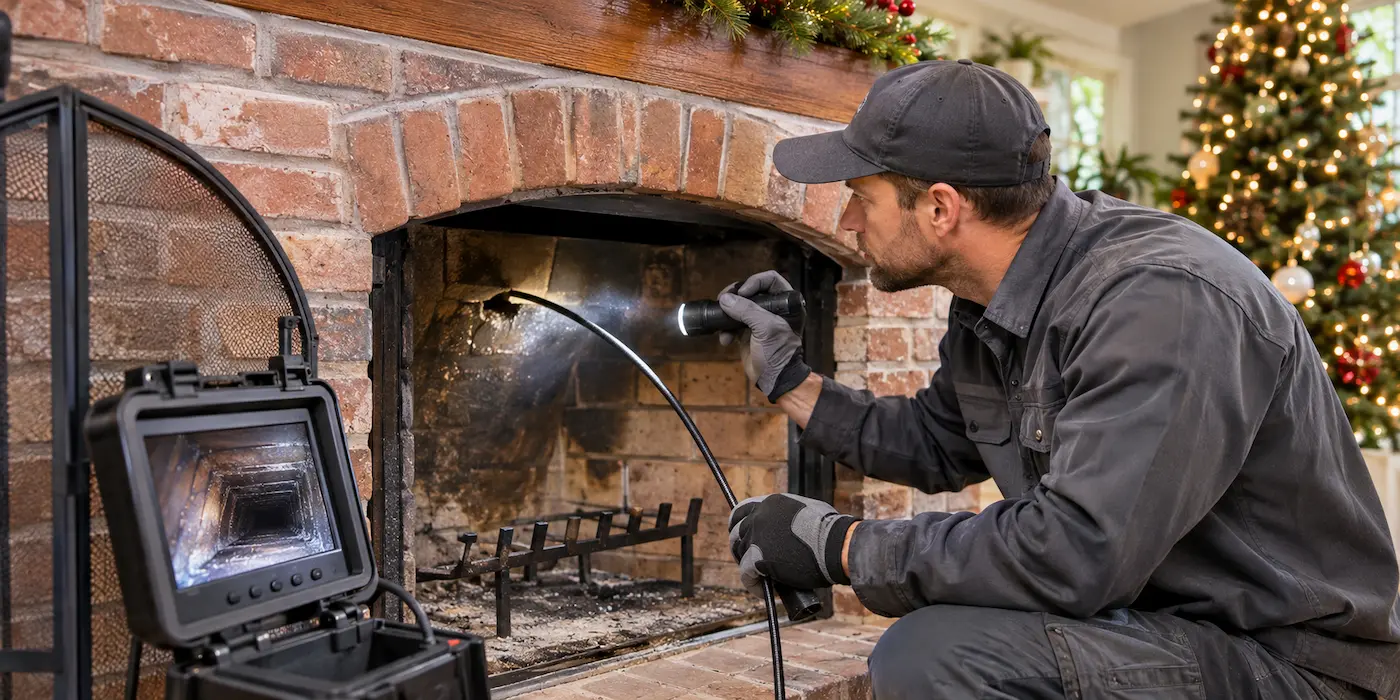
Step One: The Chimney Checklist Before the First Holiday Fire
Start at the top of the system, because that is where most hidden problems begin. Work through the table below, and treat any “call a professional” item as a reason to hold off on lighting the fire.
| Checkpoint | What to look for | When to call a professional |
|---|---|---|
| Chimney cap and top | Missing, bent, or rusted cap; debris or nesting material visible at the opening | Any damage or blockage |
| Damper | Opens fully, closes fully, and moves without force | Stuck, warped, or hard to operate |
| Firebox walls and floor | Cracked or crumbling bricks, loose mortar, gaps in the floor | Any crack that lets you see daylight or feel airflow behind the wall |
| Soot and creosote | Black, shiny or tar-like deposits on the walls, or a heavy smoky smell when the fireplace is cold | Any visible buildup, even if the fireplace worked fine last year |
| Flue passage | Light from a flashlight reaches the top; no obvious blockage | Anything blocking the view, or sounds of animals inside |
The Chimney Safety Institute of America explains that an annual inspection by a qualified professional is the best way to catch problems before they become hazards, and notes that animals can build nests in the flue of a chimney that is rarely used. A chimney that sees only a handful of fires a year still needs a yearly look.
A professional chimney inspection checks the parts you cannot see from below, and a chimney sweeping and cleaning visit removes the soot and creosote that an inspection may flag. If you have not scheduled either one yet, do it first. Appointments tend to fill up as the weather cools, so booking early gives you room to handle any repairs before the holiday week.
Step Two: Prepare the Fireplace and Hearth for Guests
Once the chimney is cleared for use, look at the space around the fire. The goal is a clear, stable zone where nothing can fall, drape, or drift into the flames.
Clear the 3-foot zone
Measure out from the edge of the firebox opening and keep that area free of anything that burns. That includes stockings and garland, throw pillows, blankets, wrapped gifts, newspapers, firewood stacked too close, and a live Christmas tree. If the mantel is part of your decorating plan, use non-flammable decorations and keep candles well away from it.
Use a screen that stays put
A properly fitted screen catches sparks and rolling embers. Check that it covers the full opening, stands steady if someone bumps it, and has no gaps at the sides. Glass doors, if you have them, should stay open while the fire burns unless the manufacturer says otherwise, so heat and gases can move up the flue.
Plan for children and pets
The hearth is attractive to curious kids and dogs. A freestanding gate or a fixed barrier keeps them back, and an adult should stay in the room whenever the fire is lit. Decide who is responsible before the party gets busy, and make that person the designated fire watcher.
Step Three: Burn Smart During the Holiday Season
What goes into the firebox matters as much as the condition of the chimney. Wet or unseasoned wood smolders, makes more smoke, and leaves more residue inside the flue. The EPA’s Burn Wise program recommends burning wood with a moisture content below 20 percent and seasoning it for at least six months before use.
The same EPA guidance lists what should never go into a wood fire: household trash, cardboard, plastics, painted or pressure-treated wood, plywood, particle board, and items printed with colored ink. After a gift-opening morning, the temptation to push boxes and wrappers into the fire is real. Take them to the recycling bin instead.
| Burn this | Never burn this |
|---|---|
| Dry, seasoned hardwood split to a manageable size | Wet, rotted or moldy wood |
| Small amounts of dry kindling | Cardboard, gift boxes and wrapping paper |
| Wood stored off the ground and covered only on top | Painted, coated or pressure-treated wood |
| Logs that sound hollow when knocked together | Plastics, foam or glossy magazines |
Keep each fire modest. A hot, steady, medium-sized fire burns more cleanly than a huge one stacked high, and it puts less stress on a chimney that has been idle for months. Never leave a fire burning when the house is empty or when everyone has gone to bed.
Warning Signs to Stop and Call for Help
Some symptoms mean the fireplace should stay cold until someone qualified has looked at it. If smoke rolls back into the room, if you smell a strong smoky or tar-like odor when the fireplace is not in use, if pieces of brick or mortar fall into the firebox, or if you hear scratching or chirping from the flue, do not light the fire. Our article on why a fireplace smokes inside the house explains the common causes, and our guide to removing chimney odors covers smells that linger.
Want the chimney checked before guests arrive? Green Home Services handles chimney inspections and cleaning across San Antonio and Austin. Request a free quote or call (210) 757-4531 to schedule a visit.
Safety Devices Every Holiday Host Should Check
A fire that burns well can still put people at risk if the home’s alarms are not working. Test every smoke alarm and carbon monoxide alarm before guests arrive, and replace batteries rather than hoping they will last. Place a working carbon monoxide alarm near sleeping areas, especially if relatives are staying overnight in rooms they do not usually use.
It also helps to keep a fire extinguisher where you can reach it quickly, away from the fireplace itself, and to make sure everyone in the house knows where it is. Review your exit plan if you have guests who are unfamiliar with the layout.
| Item | Check before guests arrive | Notes |
|---|---|---|
| Smoke alarms | Press the test button on every level | Replace batteries that are low or chirping |
| Carbon monoxide alarms | Test near sleeping areas and near the fireplace room | Follow the manufacturer’s guidance on replacement dates |
| Fire extinguisher | Confirm the gauge reads in the correct range | Keep it somewhere reachable, not beside the fire |
| Fireplace screen | Covers the opening and stands firmly | Replace if bent or missing mesh |
After the Fire: Ashes, Embers and Overnight Safety
Ashes can hold heat long after the flames are gone. Wait until the firebox is completely cold before cleaning it out, and use a metal container with a lid for disposal. Store that container outdoors on a non-combustible surface, away from the house, the garage, and the deck. Never put ashes in a paper bag, a cardboard box, or a plastic bin.
Before bedtime, confirm the fire is fully out and the screen is in place. Do not close the damper while embers are still glowing, since this can push combustion gases back into the living space. If you are unsure whether the fire is completely out, wait and check again rather than guessing.
Local Considerations for San Antonio and Austin Homes
Central Texas winters are mild compared to much of the country, which means many fireplaces are used only a few times a year. Long gaps between fires are exactly when pests move in, and small defects go unnoticed. Homes with older masonry chimneys may also show weathering at the crown and flashing after hot summers and heavy rains, so it is worth having the exterior checked at the same visit as the interior.
If you are in San Antonio, you can find more about local service on our San Antonio location page. Austin homeowners can see the equivalent on our Austin location page. For help prepping before the first fire of the season, read how to prepare your chimney for the first fire, and for a broader safety overview, see our chimney fire prevention guide for Texas homeowners.
Frequently Asked Questions
How often should a fireplace be inspected before the holidays?
At least once a year, ideally before the first fire of the season. Inspecting early gives you time to schedule cleaning or repairs without rushing. A chimney that is used only occasionally still needs a yearly check, since animals, debris, and weather damage can develop while it sits unused.
Is it safe to burn wrapping paper in the fireplace?
No. Paper, cardboard, and printed materials burn fast and hot, and can throw sparks and ash up the flue. EPA guidance lists household trash and colored-ink items among the things not to burn. Recycle gift boxes and wrapping instead, and keep only dry, seasoned firewood in the firebox.
How far should a Christmas tree be from the fireplace?
Keep it at least 3 feet from the fireplace, along with anything else that can burn. More distance is better if the room allows it. Also avoid placing a tree where guests might brush against it while walking near an active fire, and never use the mantel as a shelf for anything flammable.
Should I close the damper before going to bed?
Only after the fire is completely out and the embers are cold. Closing the damper while coals still glow can push smoke and combustion gases back into the home. When in doubt, leave the damper open, keep the screen in place and check again before closing it.
What if my fireplace smokes when I light it?
Put the fire out safely and stop using the fireplace. Common causes include a closed or partly closed damper, a blocked flue, a cold flue, wet wood, or a draft problem. Because some causes are hazardous, have a professional inspect the chimney before trying again.
Book Your Holiday Chimney Check
A safe fireplace takes a little planning, and the best time to plan is before the guest list is final. If you would like a professional to check the chimney, clean out buildup or look at the cap and flue, contact us or call (210) 757-4531. We serve homes across San Antonio and Austin, and we can walk you through what needs attention first.

Green Home Services is a trusted provider of air duct, dryer vent and chimney cleaning across San Antonio and Austin, Texas.