
Chimney fires pose a real and often underestimated threat to Texas homes, with fireplaces sparking about 14,000 house fires every year. Most people blame faulty equipment or old construction for these disasters. The real enemy is usually something invisible and silent: creosote buildup that turns your cozy nights into a major hazard before you notice a thing.
Table of Contents
- Why Chimney Fires Happen In Texas Homes
- Essential Chimney Fire Prevention Steps
- Professional Cleaning And Inspection Advice
- Extra Safety Tips For Air Duct And Dryer Vents
Quick Summary
| Takeaway | Explanation |
|---|---|
| Schedule annual chimney inspections | Have a certified professional inspect your chimney yearly to identify risks and ensure safety before peak burning season. |
| Burn only seasoned hardwoods | Use logs that have been dried for at least six months to reduce creosote buildup and improve heating efficiency. |
| Install a chimney cap | A quality chimney cap prevents debris, animals, and obstructions from entering your chimney, enhancing safety and airflow. |
| Regularly clean dryer vents | Clear lint from the dryer filter and the vent system to minimize fire risks and ensure proper airflow during dryer usage. |
| Maintain detailed system records | Keep documentation of all maintenance and inspections for your home systems to track maintenance history and support insurance claims. |
Why Chimney Fires Happen in Texas Homes
Chimney fires represent a significant risk for Texas homeowners, transforming what should be a cozy home feature into a potential disaster. Chimney maintenance for new homeowners begins with understanding the root causes of these dangerous incidents.
Creosote Buildup: The Silent Fire Starter
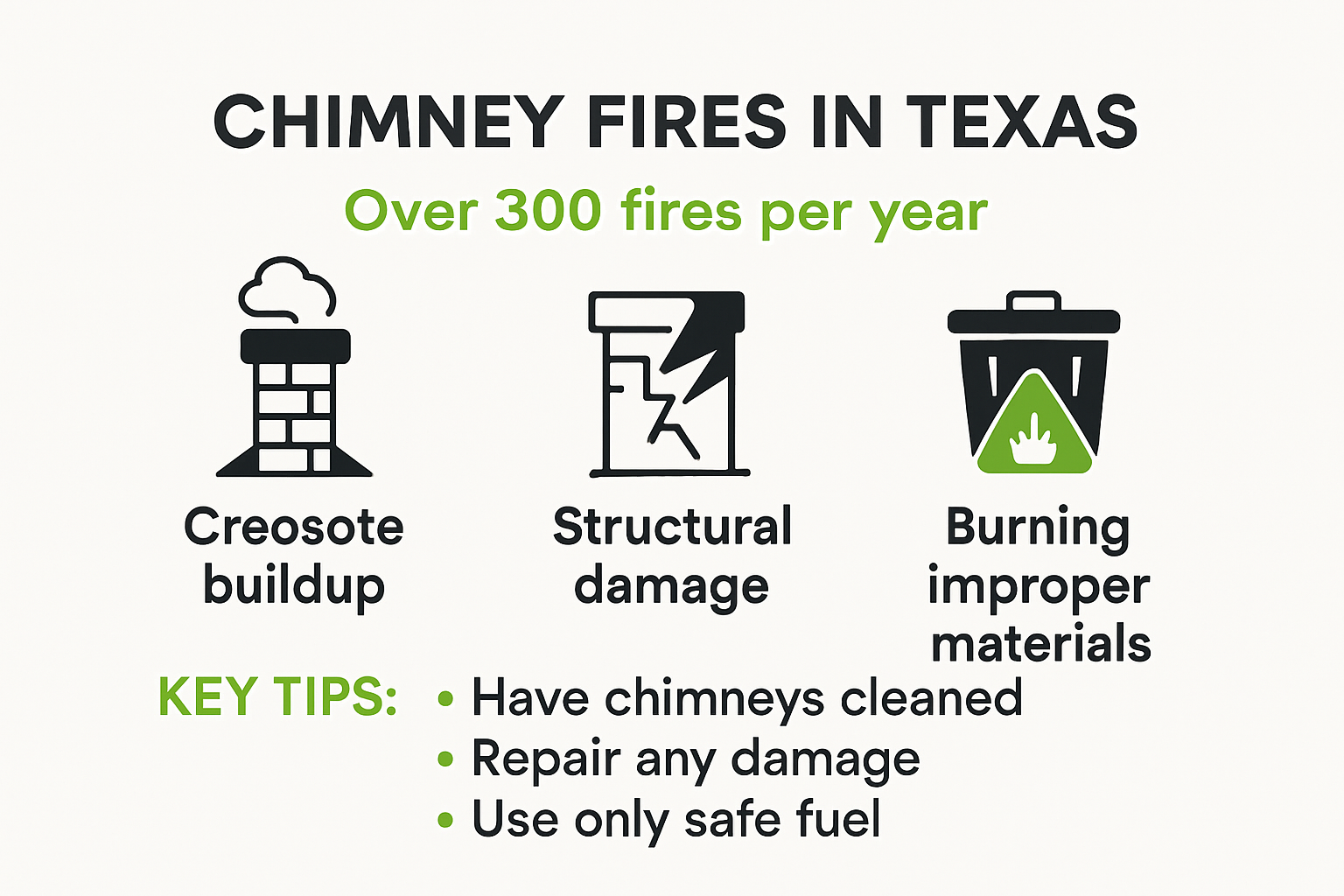
Creosote represents the most dangerous culprit behind chimney fires. This highly flammable substance forms when wood burns incompletely, creating a thick, tar-like residue that accumulates on chimney walls. According to the City of Round Rock Fire Safety Resources, approximately 14,000 house fires annually originate from fireplaces, with creosote buildup being a primary contributor.
The formation process occurs gradually. When wood burns at low temperatures or with insufficient oxygen, unburned gases condense on the cooler chimney surfaces. Over time, these deposits transform into multiple layers of increasingly flammable material. Dark and sticky in initial stages, creosote can eventually become a hard, glazed coating that’s extremely difficult to remove.
Structural Vulnerabilities and Neglected Maintenance
Texas homes often face unique challenges that increase chimney fire risks. Structural damage like missing bricks, cracked liners, or obstructed flues create perfect conditions for potential fires. The Texas Department of Insurance highlights that heating-related fires frequently result from overlooked maintenance and structural weaknesses.
Homeowners might unknowingly contribute to these risks through several common mistakes. Burning inappropriate materials like treated wood, cardboard, or excessive paper can accelerate creosote formation. Overloading fireplaces with too much wood or using unseasoned lumber dramatically increases the likelihood of incomplete combustion and subsequent creosote buildup.
Environmental and Design Factors
Texas climate and home design also play significant roles in chimney fire potential. Humid conditions can accelerate creosote condensation, while older homes might have chimneys that do not meet current safety standards. Flying sparks from improperly maintained chimneys can ignite nearby combustible materials, creating additional fire risks.
Regular professional inspections become crucial in identifying and mitigating these potential hazards. Trained experts can assess creosote levels, check structural integrity, and recommend specific preventative measures tailored to individual home characteristics. Understanding these complex interactions between environmental conditions, home design, and maintenance practices helps Texas homeowners protect their most valuable asset.
Essential Chimney Fire Prevention Steps
Preventing chimney fires requires a proactive and systematic approach that combines regular maintenance, professional inspections, and smart usage practices. Chimney cleaning safety techniques play a crucial role in protecting Texas homes from potential fire hazards.
Professional Inspection and Cleaning
Annual professional chimney inspections represent the most critical step in fire prevention. According to the City of Round Rock Fire Safety Resources, certified professionals can identify and mitigate risks that homeowners might overlook. These comprehensive evaluations involve thoroughly examining the chimney’s structural integrity, checking for creosote buildup, and ensuring proper ventilation.
Qualified technicians use specialized tools to measure creosote layers and assess potential structural vulnerabilities. They can recommend specific cleaning methods based on the chimney’s condition, which might include mechanical brushing, chemical treatments, or more advanced cleaning techniques. Homeowners should schedule these inspections before the primary burning season to address any potential issues proactively.
Safe Burning Practices
The way homeowners use their fireplaces directly impacts chimney fire risks. The New York State Division of Homeland Security and Emergency Services emphasizes several key burning practices to minimize potential hazards. First, only burn seasoned hardwoods that have been dried for at least six months. These woods burn more completely, reducing creosote formation and producing more efficient heat.
Additionally, maintain moderate fire temperatures and avoid overloading the fireplace. Small, controlled fires burn more efficiently and generate less unburned gas and particulate matter. Always use a fireplace screen to prevent sparks from escaping and keep combustible materials at least three feet away from the fireplace opening. Homeowners should never burn cardboard, treated wood, or garbage, as these materials can create excessive creosote and potentially toxic emissions.
Protective Equipment and Ongoing Maintenance
Beyond professional inspections and careful burning, homeowners can implement several protective measures. Installing a quality chimney cap prevents debris, animals, and external materials from entering the chimney, which can obstruct airflow and increase fire risks. Ensure the cap has proper mesh screening and is sized correctly for your specific chimney.
Regular visual inspections between professional evaluations can help identify potential issues. Look for signs of damage such as cracked mortar, missing bricks, or visible creosote buildup. Invest in a chimney sweeping brush and learn basic maintenance techniques to manage minor buildup between professional cleanings. Carbon monoxide and smoke detectors near the fireplace provide an additional layer of safety, alerting residents to potential problems before they escalate into serious incidents.
To clearly outline crucial safe burning practices and what practices to avoid, the following table summarizes key do’s and don’ts as described in the section above:
| Practice | Safe/Recommended? | Details |
|---|---|---|
| Burn seasoned hardwoods | Yes | Dried at least six months, reduces creosote, more efficient heat |
| Burn unseasoned/green wood | No | Increases creosote, inefficient combustion |
| Burn cardboard, garbage, treated wood | No | Produces excessive creosote and toxic emissions |
| Maintain small, controlled fires | Yes | Less unburned gas, safer, less creosote |
| Overload fireplace with wood | No | Risk of incomplete combustion, more creosote |
| Use fireplace screen | Yes | Prevents sparks from escaping |
| Keep combustibles near opening | No | Fire risk increases if within three feet of fireplace |
Professional Cleaning and Inspection Advice
Professional chimney cleaning and inspection represent critical strategies for protecting Texas homes from potential fire hazards. Professional maintenance insights can help homeowners make informed decisions about their chimney care and safety.
Selecting a Qualified Chimney Professional
Choosing the right chimney professional requires careful consideration and thorough research. Certified chimney sweeps from organizations like the Chimney Safety Institute of America (CSIA) bring specialized training and expertise to the inspection process. According to the National Fire Protection Association, professional inspections can identify potential risks that untrained eyes might miss.
Homeowners should verify several key credentials before hiring a chimney professional. Look for certifications from recognized national organizations, check professional references, and confirm insurance coverage. Ask about their specific experience with Texas home designs and local environmental conditions. A reputable professional will provide a detailed written estimate and explain their inspection process thoroughly.
The following table summarizes the required qualifications and what to look for when selecting a professional chimney sweep, as described above:
| Qualification/Criterion | Why It’s Important |
|---|---|
| Nationally recognized certification | Ensures up-to-date knowledge and standardized methods |
| Professional references | Indicates reliability and client satisfaction |
| Valid insurance coverage | Protects homeowner from liability |
| Experience with Texas home designs | Familiarity with regional construction and codes |
| Local environmental knowledge | Addresses unique climate-related risk factors |
| Provides written estimate/process | Demonstrates transparency and professionalism |
Comprehensive Inspection Techniques
A professional chimney inspection goes far beyond a simple visual assessment. Experts typically conduct three levels of inspection, each progressively more detailed. Level 1 inspections represent standard annual checkups, involving a visual examination of accessible chimney components. Level 2 inspections include video scanning and more comprehensive structural evaluations, often recommended when property changes occur or after significant weather events. According to the Chimney Safety Institute, Level 3 inspections involve removing parts of the building structure to access hidden areas.
Modern inspection techniques now incorporate advanced technologies like infrared cameras and specialized borescopes. These tools allow professionals to detect hidden cracks, moisture intrusion, and structural weaknesses that traditional methods might overlook. Thermal imaging can reveal temperature variations that indicate potential problem areas, providing homeowners with unprecedented insight into their chimney’s condition.
Understanding Inspection Reporting and Recommendations
A comprehensive chimney inspection should result in a detailed report that outlines current conditions, potential risks, and recommended actions. Homeowners should expect documentation that includes specific measurements of creosote buildup, assessment of liner conditions, and evaluation of structural integrity. Professional reports often include photographic evidence and detailed explanations of any identified issues.
Critical recommendations might include immediate repairs, suggested cleaning schedules, or modifications to burning practices. Some professionals provide cost estimates for recommended repairs and can help prioritize maintenance tasks. Homeowners should view these reports as proactive health assessments for their home’s chimney system, treating them as essential documents for long-term property maintenance and safety.
Extra Safety Tips for Air Duct and Dryer Vents
While chimney fire prevention remains crucial, Texas homeowners must also pay attention to other potential fire hazards in their home, particularly air ducts and dryer vents. Advanced dryer vent maintenance can significantly reduce the risk of unexpected fires and improve overall home safety.
Dryer Vent Fire Prevention Strategies
Dryer vent maintenance represents a critical yet often overlooked aspect of home fire prevention. According to the Idaho Department of Insurance, lint accumulation poses a serious fire risk that can be mitigated through regular cleaning and inspection. Homeowners should develop a comprehensive approach to dryer vent safety that goes beyond simple filter cleaning.
Key prevention strategies include cleaning the lint filter before or after each laundry load, inspecting the entire vent system for blockages, and ensuring proper airflow. The Massachusetts Department of Fire Services recommends checking the exterior vent cover to confirm it opens and closes properly during operation. Signs of potential issues include clothes taking longer to dry, excessive heat during drying cycles, and a burning smell when the dryer operates.
Air Duct Maintenance and Fire Risk Reduction
Air duct systems can also contribute to fire risks if not properly maintained. Dust, debris, and potential combustible materials can accumulate in ductwork, creating potential fire hazards. Professional air duct cleaning helps remove these potential risks while improving overall home air quality and system efficiency.
Homeowners should schedule professional inspections at least once every three to five years, or more frequently in homes with pets, recent renovations, or residents with respiratory conditions. Look for signs of potential issues such as visible dust buildup, inconsistent airflow, unexplained increases in energy bills, or unusual odors when the HVAC system operates. Professionals can use specialized equipment to thoroughly clean and inspect the entire duct system, identifying and addressing potential fire risks.
Below is a summary table highlighting key dryer vent and air duct maintenance actions and warning signs to watch for, as detailed in the article above:
| Task/Sign | Dryer Vents | Air Ducts | Notes |
|---|---|---|---|
| Clean lint filter every load | Yes | N/A | Prevents lint buildup/fire hazard |
| Inspect for blockages | Yes | Yes | Ensure airflow; look for dust & debris |
| Professional cleaning interval | At least annually | Every 3–5 years | More often with pets, renovations, etc. |
| Check exterior vent operation | Yes | N/A | Exterior dryer vent should open freely |
| Warning: longer drying times | Yes (warning sign) | N/A | Indicates possible blockage or lint buildup |
| Warning: inconsistent airflow | N/A | Yes (warning sign) | May suggest duct blockage or other issues |
| Smell of burning | Yes (warning sign) | N/A | Stop usage and inspect immediately |
Comprehensive Home Safety Approach
Effective fire prevention extends beyond individual system maintenance. Homeowners should develop a holistic approach that combines regular professional inspections, proactive maintenance, and awareness of potential risks. Install smoke detectors near dryer and HVAC areas, and consider investing in fire-resistant materials and protective devices.
Keep detailed maintenance records for all home systems, including dryer vents and air ducts. This documentation can help track potential issues, provide valuable information for insurance purposes, and ensure consistent maintenance. Remember that prevention is always more cost-effective and safer than addressing a potential fire aftermath. Regular professional inspections, combined with homeowner diligence, create a comprehensive fire prevention strategy that protects both property and lives.
Frequently Asked Questions
What causes chimney fires in Texas homes?
Chimney fires in Texas homes are primarily caused by creosote buildup, structural vulnerabilities, and environmental factors. Creosote forms when wood burns incompletely, leading to accumulations that can ignite. Poor maintenance and structural issues also contribute significantly to the risk of chimney fires.
How often should I schedule chimney inspections?
Homeowners should schedule annual chimney inspections by a certified professional, especially before the primary burning season. Regular inspections help identify risks, such as creosote buildup and structural issues, facilitating timely maintenance and safety measures.
What types of wood should I burn in my fireplace?
You should only burn seasoned hardwoods that have been dried for at least six months. Seasoned wood burns more completely, resulting in less creosote buildup and more efficient heating compared to unseasoned wood or other materials like cardboard and treated wood.
How can I prevent fire hazards from my dryer vent?
To prevent fire hazards from your dryer vent, clean the lint filter before or after each load, inspect the vent system for blockages, and ensure proper airflow. Regular cleaning of the dryer vent and scheduling professional inspections can significantly reduce the risk of dryer fires.
Take Action to Safeguard Your Home and Air
Have you ever worried about the hidden dangers of creosote buildup, clogged vents, or fire risks in your Texas home? Many homeowners make the mistake of ignoring their air systems until the warning signs become serious. Blocked dryer vents and uncleaned air ducts do more than increase fire hazards; they trap dust and pollutants, lowering your indoor air quality and putting your family at risk. This article highlighted the urgency of regular professional inspections, comprehensive maintenance, and actionable steps you can take to prevent disaster.

Why wait until a small oversight turns into a costly emergency? The expert team at Green Home Duct Cleaning serves San Antonio and Austin homes with trusted, eco-friendly duct and vent cleaning. Let us help you address creosote danger, maintain a healthy airflow, and reduce your fire risk. Ready for peace of mind? Visit our main site or learn more directly about how to protect your family’s safety on our dedicated page about chimney cleaning for new homeowners in Texas. Book your inspection with Green Home Duct Cleaning today and make your home’s protection a top priority.
Recommended
- Chimney Cleaning Safety Tips for Texas Homeowners 2025 – Green Home Services
- Chimney Maintenance Checklist 2025 for Texas Homeowners – Green Home Services
- Chimney Maintenance Tips for Texas Homeowners in 2025 – Green Home Services
- Chimney Cleaning for New Homeowners in Texas: 2025 Guide – Green Home Services