
Why does my chimney flashing leak after a rainstorm?
Chimney flashing is the metal seal where the chimney meets the roof. When it rusts, lifts, or loses its sealant, rainwater runs behind it and into the attic, ceiling, or walls. The usual clue is a stain near the chimney that appears or grows after a storm. Dry the area, place a container under any drip, and call a professional. Repair is much simpler before the water reaches framing and insulation.
Key Takeaways
- Flashing is the most common leak point where a chimney passes through the roof.
- Leaks often show up as ceiling or wall stains near the chimney, not as water in the firebox.
- The crown, cap, masonry, and roof can leak too, so the true source needs to be confirmed.
- Surface sealant alone is often a short-term fix. Lasting repairs address the flashing itself.
- Check after heavy rain and act quickly, since wet materials that stay damp can lead to mold and rot.
What Chimney Flashing Is and What It Does
A chimney is a solid block rising through a sloped roof, and the joint between the two has to stay watertight through every storm. Flashing is the thin metal, usually galvanized steel, aluminum, or copper, that bridges that joint. It is layered with the roofing and the chimney masonry so water runs over it and away, not behind it.
Most chimney flashing has two parts that work together. The first is metal that sits under the shingles and turns up against the side of the chimney. The second is a cover piece, often called counterflashing, set into the masonry joints or tucked into a cut groove so it overlaps the lower piece. Together they form a path that sheds water from the chimney face to the roof surface.
Because flashing sits where two different materials meet, it is also where those materials move differently. The roof expands and contracts with temperature, the chimney shifts slightly, and the sealant holding everything together ages. Over time, that movement opens gaps that rain can find.
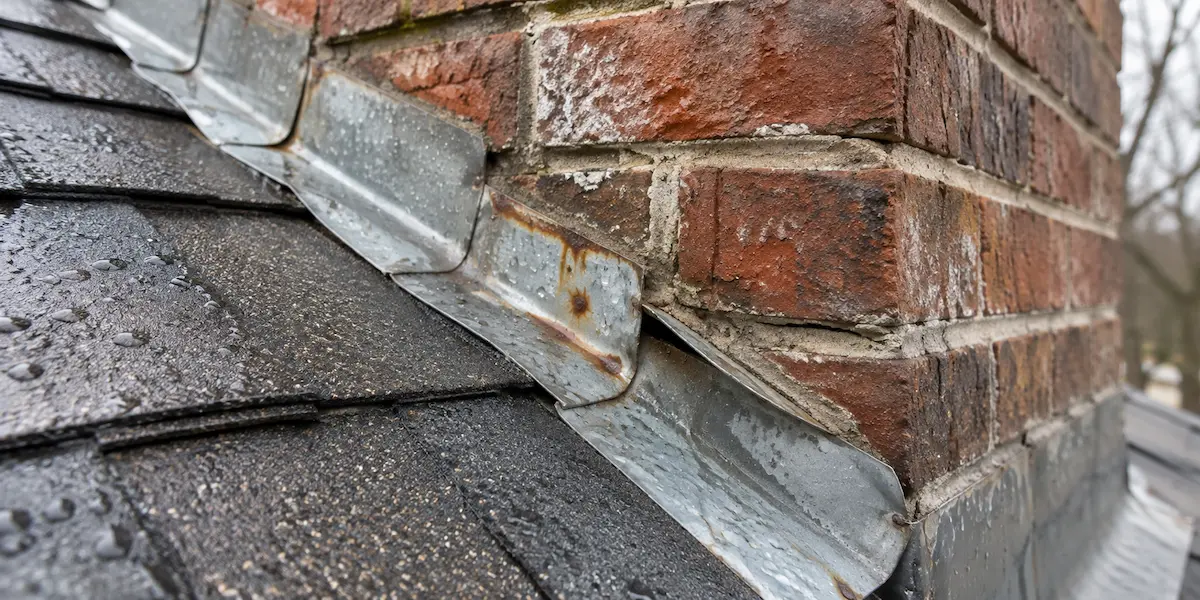
How Flashing Fails
| Failure | What causes it | What you might see |
|---|---|---|
| Rust or corrosion | Age, moisture, and mismatched metals | Orange or brown streaks, flaking metal, small holes |
| Lifted or bent edges | Wind, thermal movement, or earlier repairs | Gaps along the metal, curled edges |
| Dried-out sealant | Sun, heat, and age break down caulk and roofing cement | Cracked, shrunken, or missing sealant lines |
| Loose counterflashing | Mortar joints weaken where the metal is set | Metal pulling away from the brick |
| Poor original installation | Missing overlap or reliance on sealant alone | Repeated leaks in the same spot after repairs |
Central Texas conditions are hard on this joint. Long, hot summers cook sealant, and heavy rainstorms then test every weak point at once. A flashing seal that looked fine in spring can reveal itself after the first big downpour of the fall.
Signs of a Flashing Leak After a Storm
Water takes the easiest path, so the place where it appears is rarely the place where it enters. A drip at a ceiling can come from a spot several feet away, following a rafter or the underside of the decking. Look for these clues after heavy rain:
- A brown or yellow stain on the ceiling or wall near the chimney
- Peeling paint, bubbling drywall, or damp insulation in the attic around the chimney
- Wet, darkened wood near the chimney in the attic
- A musty smell near the fireplace that gets stronger after rain
- Visible rust or gaps in the flashing at the roofline, if you can see them from the ground
- Water marks around the mantle or on the firebox wall
A stain that shows up in only one spot after a single storm may be a small gap. A stain that spreads each time it rains suggests the leak is ongoing. Photograph the stain after each storm so you can describe the pattern when you call for help.
Is It the Flashing, the Crown, the Cap or the Roof?
Flashing is a frequent culprit, but it is not the only one. Several parts of the system can let water in, and treating the wrong one wastes money and leaves the leak in place. A professional inspection looks at all of them together.
| Possible source | Typical clue | Related service |
|---|---|---|
| Flashing at the roof joint | Stains on the ceiling or in the attic along the chimney edges | Flashing installation and repair |
| Cracked crown | Water in the firebox, damp masonry, white staining on brick | Chimney crown |
| Missing or damaged cap | Rain falling directly down the flue, rust on the damper | Chimney caps and spark arrestors |
| Porous or damaged brick and mortar | Dark, damp patches on the chimney face, crumbling joints | Chimney leak resolution and brick repair |
| Roof covering near the chimney | Missing or lifted shingles, leaks that appear away from the chimney | Roofing contractor |
A chimney inspection helps separate these causes. It is easy to blame the roof when a stain appears, but chimney-related leaks are frequently misdiagnosed as roof leaks, and the reverse is also true.
Found a stain near your chimney after the rain? Green Home Services serves San Antonio and Austin. Request a free quote or call (210) 757-4531 to have the source identified.
What to Do Right After a Leak Appears
Quick, simple steps limit damage while you arrange a proper repair.
- Place a bucket or container under any active drip, and move belongings away from the area.
- Photograph the stain, the date, and the weather so the pattern is documented.
- If it is safe and you can reach it, check the attic for wet insulation or wood near the chimney, and wear protection when you do.
- Dry damp materials as soon as possible. The EPA notes that drying wet materials within 24 to 48 hours usually prevents mold from growing.
- Avoid using the fireplace if water is entering the firebox or the chimney appears damaged.
- Do not climb onto a wet roof. Falls are a serious risk, and the work needs trained crews with proper equipment.
- Call a professional to inspect and recommend a repair.
Heavy ceiling staining, sagging drywall, or a ceiling that is dripping steadily is a reason to move quickly. Trapped water can weigh down drywall and, in the worst case, cause sections to fall.
Why Caulk Alone Is Rarely the Answer
Hardware stores sell roofing sealant, and applying it to a visible gap can feel like a sensible first step. In some cases, it buys a little time. The problem is that sealant is the part of the system that ages first, and a fresh bead over rusted, lifted, or poorly installed metal rarely lasts. It can also trap moisture or hide the real problem from a later inspection.
A lasting repair usually involves replacing or reinstalling the metal itself, restoring the overlap between the base flashing and the counterflashing, and sealing the masonry joint properly. Our chimney repair and restoration service covers work like this, and our article on chimney masonry repairs for Texas homeowners explains how water and masonry damage connect.
Preventing Flashing Leaks Before the Next Storm
Flashing can last many years when it is installed properly and checked regularly. The most useful habit is an annual look at the chimney exterior as part of a routine inspection. That visit can catch rust, lifting, and failing sealant before the next heavy rain exposes them.
| Habit | Benefit | Timing |
|---|---|---|
| Annual chimney and roofline inspection | Finds small problems before water enters | Early fall, before heavy rain and cold weather |
| Check the attic after major storms | Catches damp insulation and stains early | After heavy rain |
| Keep gutters and roof valleys clear | Reduces water pooling near the chimney | Seasonally |
| Repair small gaps promptly | Avoids larger repairs to framing and finishes | As soon as they are found |
If you are in Austin or San Antonio, remember that a storm can arrive in any season, so there is no wrong time to ask for an inspection. Doing it before a wet stretch is simply cheaper than doing it after.
Frequently Asked Questions
How do I know if my chimney flashing is leaking?
The most common sign is a stain on the ceiling or wall near the chimney that appears or grows after rain. Other clues include damp attic insulation, wet wood near the chimney, and rust or gaps in the metal at the roofline. An inspection confirms whether flashing, crown, cap, or roof is the source.
Can I repair chimney flashing myself?
Small sealant touch-ups are sometimes attempted, but they require working on a roof and often fail within a short time. Proper repair typically means replacing or resetting metal and sealing masonry joints. Because falls from roofs are dangerous, we recommend leaving flashing work to trained professionals with the right equipment.
Why does my chimney only leak during heavy rain?
Small gaps may not admit much water in light rain but can let in a lot when rain is heavy, wind-driven, or falls for a long time. Heavy storms test every weak point at once, so a leak that appears only occasionally still points to a real problem worth fixing.
Is a chimney leak an emergency?
It depends on severity. A small stain is not usually an emergency, but it is a warning to schedule an inspection soon. A steady drip, sagging ceiling, or water entering the firebox needs faster attention, since trapped moisture can damage framing, insulation, and finishes and may encourage mold if it stays damp.
How often should chimney flashing be checked?
At least once a year, as part of a regular chimney inspection, and after any severe storm. Early fall is a convenient time because repairs can be done before winter and heavy rain. Older homes or roofs that have had recent work may benefit from an additional check.
Have the Source of the Leak Found and Fixed
If you have noticed stains near your chimney or you would like the flashing checked before the next storm, contact us. We help homeowners across San Antonio and Austin identify where water is entering and recommend repairs that match the actual problem.

Green Home Services is a trusted provider of air duct, dryer vent and chimney cleaning across San Antonio and Austin, Texas.