
How do chimney crown cracks and winter freeze damage a chimney?
A chimney crown is the masonry cap on top of the chimney that sheds water. When it cracks, rain seeps into the brick below. If temperatures drop below freezing, that trapped water expands as it turns to ice and can widen the cracks, even if freezes in Texas are brief. Small cracks are usually repairable. Larger or crumbling crowns may need rebuilding. Have it inspected before winter and after any hard freeze.
Key Takeaways
- The crown protects the flue and brick from water. Cracks let moisture into the masonry.
- Water that freezes inside masonry expands and can enlarge existing cracks.
- Central Texas freezes are occasional, but heat, storms, and age also wear crowns down.
- A crown is not the same as a cap. Each protects a different part of the chimney.
- Early, small repairs usually cost far less than repairs after water has soaked the structure.
What a Chimney Crown Does and Why It Cracks
The crown is the flat or slightly sloped layer of masonry that covers the top of the chimney structure and surrounds the flue liner. Its main job is to send rainwater outward and away from the brick, mortar, and flue. A well-built crown overhangs the sides of the chimney so water drips clear of the walls.
Crowns crack for several reasons. Some are built from ordinary mortar instead of a mix designed for exposed surfaces, which makes them thin, brittle, and prone to shrinkage cracks. Others lose their seal where the crown meets the flue liner, so water enters at that joint. Years of sun, rain, and temperature swings also take a toll, especially on older homes where the original crown has never been repaired.
None of these causes need a freeze to start. Cracking can begin in summer heat, and the first sign is often a thin hairline line that looks harmless. The risk is what the crack allows next: water traveling into places it was never meant to reach.
How Winter Freeze Makes Crown Cracks Worse
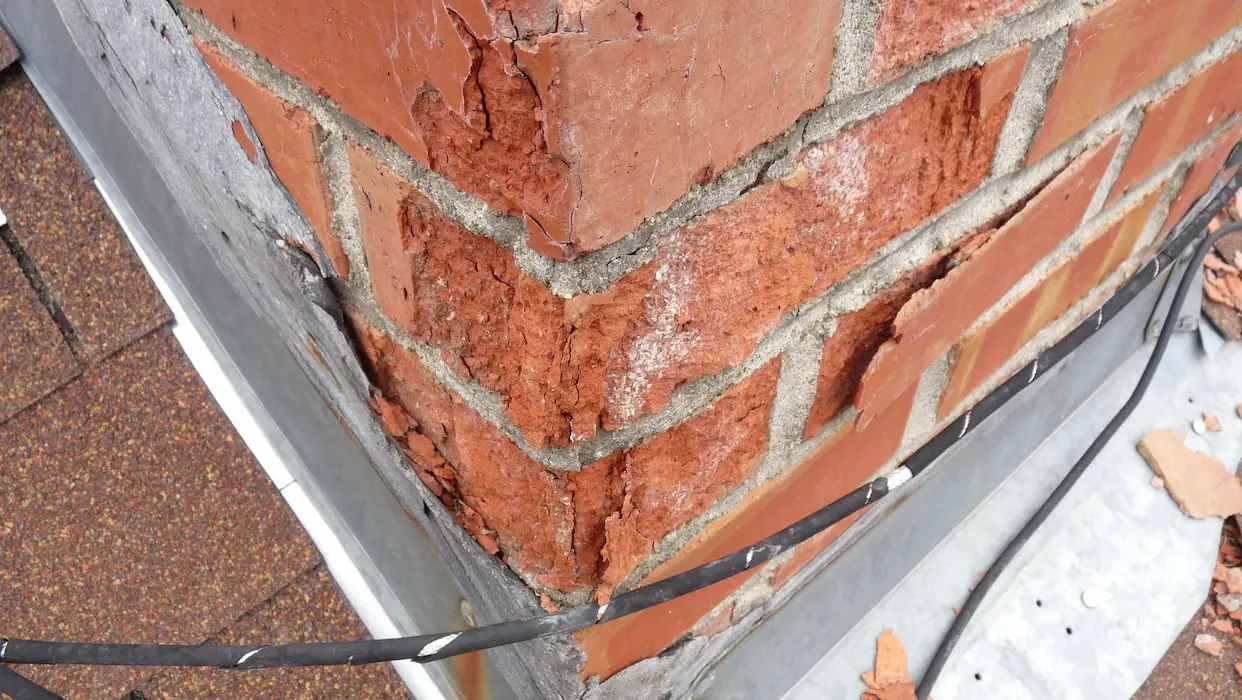
Water expands when it freezes. If a crack has soaked up moisture and the temperature falls below freezing, the ice presses outward against the surrounding material. When the ice thaws, the crack is slightly wider than before, and the next rain carries more water in. Repeated cycles can turn a hairline crack into a gap and, eventually, loosen bricks and mortar joints.
Central Texas does not have the long freezing winters of northern states, so this cycle happens less often here. It still happens. Cold snaps do reach San Antonio and Austin, and masonry that has been absorbing water through summer storms may already be saturated when one arrives. A crown that has been quietly deteriorating for years is more vulnerable to a short freeze than a sound one.
| Stage | What is happening | What you might notice |
|---|---|---|
| Hairline cracks | Surface shrinkage or age cracks begin to open | Thin lines visible on top of the chimney |
| Water entry | Rain follows cracks into the crown and brick | Damp or darkened masonry after storms |
| Freeze and thaw | Trapped water expands as ice, then thaws and leaves wider gaps | Cracks that grow after a cold snap |
| Masonry damage | Brick and mortar loosen or flake | Crumbling mortar, white staining, loose bricks |
| Interior effects | Moisture reaches the flue, firebox, or nearby walls | Stains, musty smells, rusted damper |
Crown, Cap and Chase Top: Not the Same Thing
Homeowners often use these terms interchangeably, which can lead to the wrong repair request. A chimney cap is typically a metal or masonry covering that sits over the flue opening to keep out rain, debris, and animals. The crown is the masonry surface that surrounds the flue and covers the top of the chimney structure. A chase top is the metal cover used on a factory-built or framed chimney enclosure.
All three can fail, and each protects something different. A new cap will not repair a cracked crown, and a coating on the crown will not replace a missing cap. If you are unsure which part you have, our article on chimney cap versus chase top explains how to tell them apart. A professional can confirm what is installed and what is needed, whether that is a chimney crown repair, a chimney cap and spark arrestor, or a chase top.
Signs Your Crown May Be Cracked
You can often spot warning signs from the ground, even without climbing onto the roof. Use binoculars on a clear day, and stay off the roof yourself, since falls from roofs are a serious hazard. Look for any of these:
- Visible cracks or gaps across the top surface of the crown
- Pieces of crown or mortar on the roof, in the gutters or on the ground
- White, powdery deposits on the brick, which can indicate moisture moving through the masonry
- Crumbling or missing mortar between bricks near the top
- Rust or water stains inside the firebox or on the damper
- Damp patches or stains on ceilings and walls near the chimney after rain
Interior clues are easy to misread. Stains near the chimney after a storm can come from the crown, the cap, the flashing or the roof itself. That is why a professional chimney inspection looks at the whole system together instead of guessing at a single cause.
Repair or Rebuild: How the Decision Is Made
The right fix depends on how much of the crown is damaged and whether water has already affected the masonry below. Minor surface cracks may be repaired and sealed. A crown with widespread cracking, missing sections, or poor construction may need to be rebuilt with materials designed for exposed conditions. Sealing a crown that has structural problems can hide the damage for a short time without stopping it.
| Condition | Usual direction | Why |
|---|---|---|
| Thin hairline cracks, no loose material | Repair and seal | Closes the entry point before water travels further |
| Wider cracks or flaking surface | Repair or resurface, as advised after inspection | Surface may no longer shed water properly |
| Crumbling or missing sections | Rebuild the crown | Patching weak material rarely lasts |
| Crown damage with brick or mortar damage | Repair crown and surrounding masonry | Water may already have reached the structure |
Each of these choices should come from an actual inspection, not a rule of thumb. For problems that go beyond the crown, our chimney leak resolution and brick repair service covers moisture-related damage in the masonry, and the chimney masonry repairs guide explains what homeowners should expect.
Why Water Entry Matters Even Without Freezing
It is tempting to treat crown cracks as a northern-climate problem, but the main issue is water, not ice. The EPA’s guidance on moisture explains that drying water-damaged materials within 24 to 48 hours generally prevents mold growth. A masonry chimney that stays wet through repeated storms does not dry that quickly, because the moisture is trapped inside the structure.
Persistent moisture can corrode the damper, stain nearby interior surfaces, loosen mortar and shorten the life of the flue liner. These effects build slowly, so many homeowners first notice them after the damage is well established. CSIA’s guidance on annual inspection by a qualified professional exists in part to catch these changes before they become expensive.
What to Do Before and After a Cold Snap
You cannot prevent weather, but you can prepare. The steps below help whether you are expecting a freeze or recovering from one.
- Schedule an inspection in early fall, before the first cold forecast, and ask specifically about the crown, cap, and flashing.
- Repair visible cracks promptly, while they are still small.
- Make sure the cap is in place and undamaged so rain does not enter through the flue.
- After a hard freeze, look at the top of the chimney from the ground for new cracks or debris.
- If you see fresh damage or stains, avoid using the fireplace until it has been checked.
Homeowners in Austin and San Antonio should also keep in mind that spring storms follow winter. A crown that survives a freeze with new cracks can leak badly in the first heavy rain, so repair in the cooler months rather than waiting for the next downpour.
How Long Can You Wait to Repair a Cracked Crown?
There is no single safe timeline, since the answer depends on the size of the crack and how much rain the chimney sees. A small hairline crack may be a low-priority repair that you schedule during a routine visit. A crack that is widening, shedding material or accompanied by interior stains is more urgent. In general, treat any visible crown damage as something to plan for soon, because the cost tends to increase as water reaches more of the structure.
Waiting through a wet season can mean replacing bricks and mortar that could have been saved. Asking for an inspection now gives you a clear picture and lets you choose a repair that fits your budget and timeline.
Frequently Asked Questions
Does it freeze enough in Texas to damage a chimney crown?
Freezes are occasional in Central Texas, but they do happen. Water already trapped in a cracked crown can expand when temperatures drop below freezing. Even without freezing, repeated rain entering cracks wears down masonry, so crown cracks are worth repairing no matter how mild your winters usually are.
What is the difference between a chimney crown and a chimney cap?
The crown is the masonry surface that covers the top of the chimney and surrounds the flue, shedding water away from the brick. The cap is a separate cover over the flue opening that blocks rain, debris, and animals. Both protect the chimney, but each needs its own inspection and repair.
Can I fix a cracked chimney crown myself?
Surface sealants are sold for homeowners, but the work involves climbing onto the roof, which carries real fall risk. Sealing can also hide structural problems. A professional can judge whether the crown needs a repair or a rebuild and can reach the top safely. We recommend an inspection first.
How can I tell if water is getting in through the crown?
Signs include white powdery deposits on the brick, damp or darkened masonry after rain, crumbling mortar near the top, rust inside the firebox and stains on ceilings or walls near the chimney. These can have other causes, so an inspection helps confirm whether the crown, cap or flashing is the source.
Is a cracked chimney crown dangerous?
A crack is not usually an immediate hazard, but it lets water into the masonry, which can lead to loose bricks, a damaged flue, and interior leaks over time. If you see falling mortar, a leaning chimney, or fresh water damage, stop using the fireplace and have it inspected promptly.
Schedule a Chimney Crown Inspection
If you have noticed cracks, stains, or crumbling mortar, or if you simply have not had your chimney checked this year, contact us. We serve homes across San Antonio and Austin, and we can help you decide whether a repair, a rebuild, or routine monitoring is the right next step.

Green Home Services is a trusted provider of air duct, dryer vent and chimney cleaning across San Antonio and Austin, Texas.