
When is the best time of year to clean a chimney?
The best time to clean a chimney is late summer or early fall, before the first cold snap creates demand for fireplace use and while chimney sweeps have more open scheduling. Cleaning after winter's last fire is also effective, since it removes creosote and soot before months of humidity and moisture can worsen buildup or attract pests. Scheduling early avoids the fall rush and ensures the fireplace is ready when temperatures drop. Green Home Services offers chimney cleaning year-round across San Antonio and Austin.
Chimney cleaning might sound like just another household chore and yet it’s central to protecting both your home and your family. Here is something surprising. Creosote buildup in chimneys causes more than 25,000 house fires in the US every year. Most people focus on keeping their floors and counters spotless but forget that ignoring the chimney can put an entire house at risk. The real danger is invisible until it’s too late.
Table of Contents
- What Is Chimney Cleaning And Its Purpose?
- Why Timing Matters: Benefits Of Seasonal Cleaning
- How Seasonal Changes Affect Chimney Condition
- Understanding Key Indicators For Cleaning Needs
Quick Summary
| Takeaway | Explanation |
|---|---|
| Regular chimney cleaning is critical for safety. | Cleaning prevents fire hazards and ensures safe operation of your fireplace or wood stove. |
| Creosote buildup is a significant fire risk. | Accumulated creosote can ignite; it has three stages, each representing greater danger. |
| Timing your cleaning enhances effectiveness. | Seasonal cleaning, especially in summer and fall, prepares your chimney for winter usage, optimizing performance and safety. |
| Look for key indicators for cleaning needs. | Signs like soot buildup or smoke backing up indicate it’s time for professional maintenance. |
| Professional inspections catch hidden issues. | Expert technicians can identify structural problems and blockages that may go unnoticed during simple checks. |
What is Chimney Cleaning and Its Purpose?
Chimney cleaning represents a critical home maintenance procedure designed to ensure safe and efficient fireplace and wood stove operation. This specialized service involves removing accumulated debris, soot, and potentially hazardous substances from interior chimney surfaces, preventing potential fire risks and maintaining optimal indoor air quality.
The Science Behind Chimney Accumulation
When wood burns, it produces a highly flammable substance called creosote that gradually builds up along chimney walls. According to the Massachusetts Department of Fire Services, this residue can create significant fire hazards if left unchecked. Creosote appears in three distinct forms:
- First stage: Light, powdery residue
- Second stage: Sticky, tar-like substance
- Third stage: Hard, glazed coating extremely difficult to remove
Each stage represents increasing complexity and potential danger, underscoring the importance of regular professional cleaning.
To help clarify the differences between the three stages of creosote buildup mentioned in the article, the following table breaks down their characteristics and associated risks.
| Creosote Stage | Description | Cleaning Difficulty | Fire Risk Level |
|---|---|---|---|
| First Stage | Light, powdery residue | Easy to remove | Lower |
| Second Stage | Sticky, tar-like substance | Moderately difficult | Moderate |
| Third Stage | Hard, glazed coating | Extremely difficult to remove | Highest |
Why Professional Chimney Cleaning Matters
Professional chimney cleaning goes beyond simple surface cleaning. Read more about chimney sweeping techniques for comprehensive maintenance. Technicians perform thorough inspections to identify potential structural issues, blockages, or damage that could compromise your home’s safety. The U.S. Environmental Protection Agency recommends annual professional inspections to prevent smoke infiltration and reduce fire risks.
Beyond safety, regular chimney cleaning improves overall heating efficiency, reduces energy consumption, and prevents costly structural repairs. By removing obstructions and buildup, homeowners ensure their heating systems operate at peak performance, ultimately protecting both their property and their family’s health.
Why Timing Matters: Benefits of Seasonal Cleaning
Seasonal chimney cleaning is not just a recommended maintenance task but a critical strategy for homeowners to protect their property and ensure optimal heating system performance. Timing plays a crucial role in maximizing the effectiveness of chimney maintenance and preventing potential safety hazards.
The Seasonal Impact on Chimney Conditions
Different seasons present unique challenges for chimney maintenance. According to the Federal Emergency Management Agency, understanding seasonal variations is key to preventing chimney fires and maintaining system integrity.
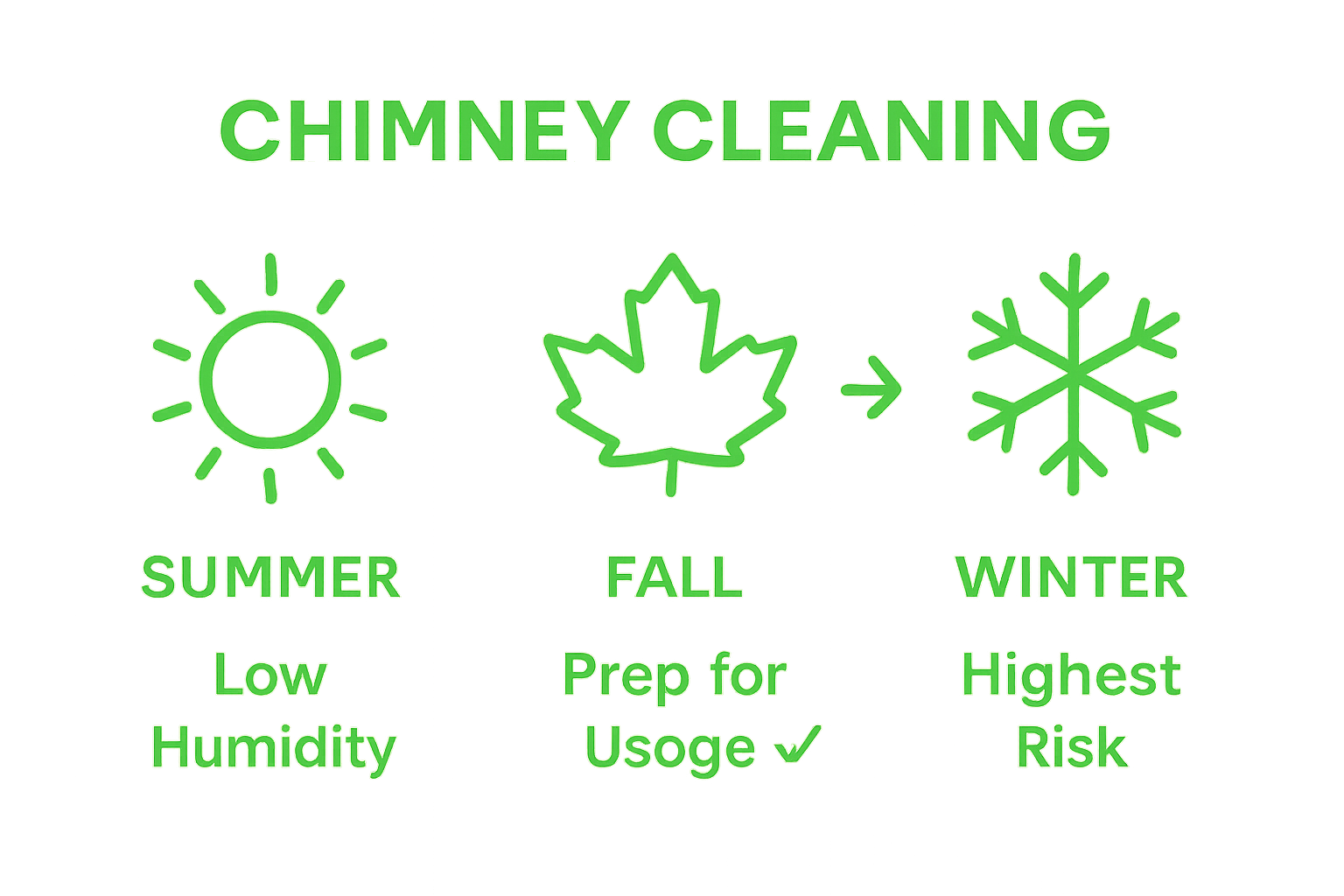
Summer and fall emerge as the most strategic periods for comprehensive chimney cleaning:
- Summer: Low humidity reduces moisture accumulation
- Fall: Prepares the chimney for intense winter usage
- Winter: Highest risk period for creosote buildup
Proactive Maintenance and Long-Term Benefits
Explore our seasonal maintenance strategies to protect your home. Professional chimney cleaning during optimal seasons offers significant advantages. By addressing potential issues before peak usage, homeowners can prevent expensive repairs, reduce fire risks, and maintain efficient heating system performance. The process involves thorough inspection, cleaning, and potential minor repairs that prevent larger, costlier problems from developing.
Moreover, seasonal cleaning helps identify structural weaknesses, potential blockages, and early signs of wear that might compromise the chimney’s functionality. This proactive approach not only ensures safety but also extends the lifespan of your chimney and heating system, ultimately protecting your home investment.
How Seasonal Changes Affect Chimney Condition
Chimney conditions are dramatically influenced by seasonal temperature fluctuations, humidity levels, and environmental factors. Understanding these dynamic changes helps homeowners proactively maintain their chimney’s structural integrity and prevent potential damage throughout the year.
Temperature and Moisture Interactions
Temperature variations create significant stress on chimney structures. According to the Connecticut Department of Consumer Protection, seasonal transitions can accelerate material degradation. Different seasons introduce unique challenges:
- Summer: High heat expands masonry materials
- Winter: Freezing temperatures cause potential cracking
- Spring/Fall: Rapid temperature shifts increase structural strain
Humidity and Material Deterioration
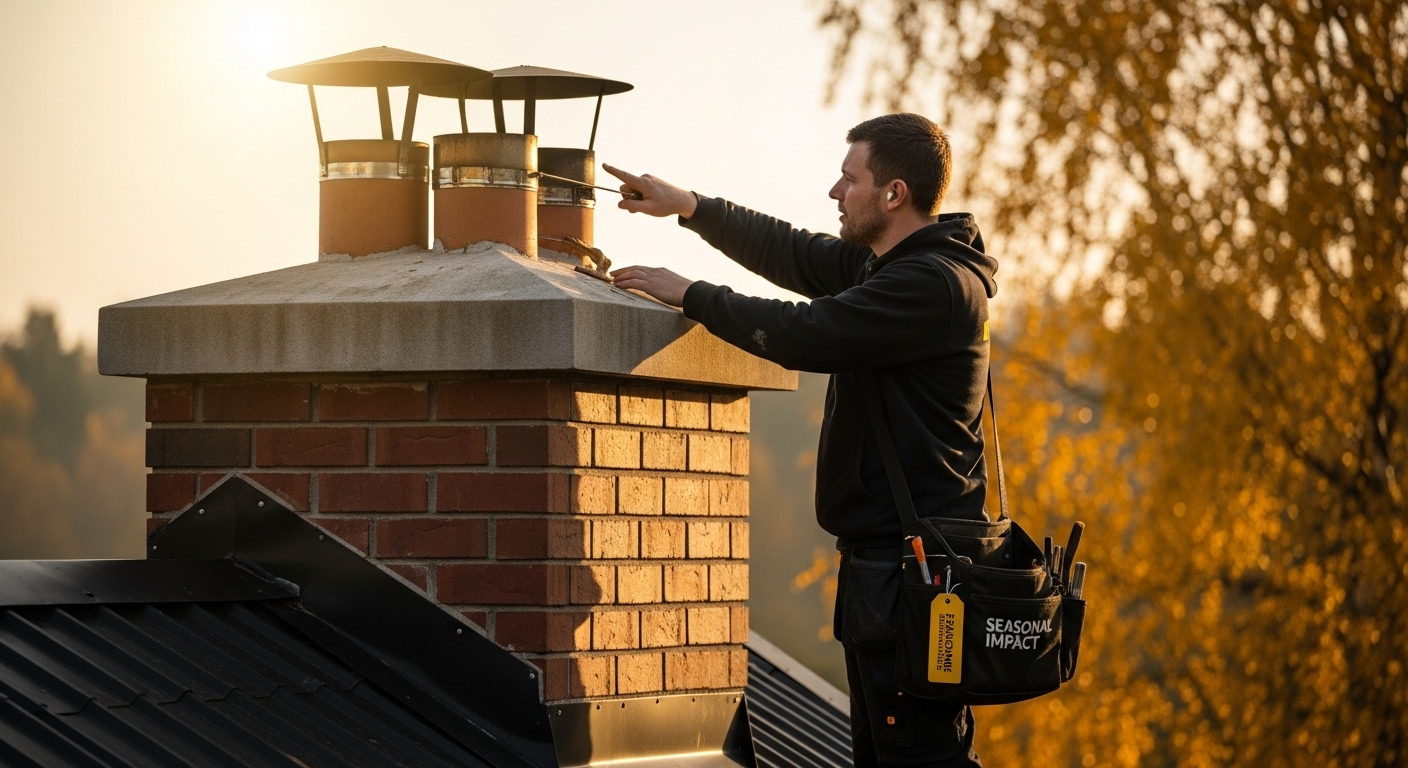
Learn more about comprehensive chimney maintenance to protect your home investment. Moisture plays a critical role in chimney deterioration. During humid summers, moisture penetrates porous brick and mortar, while winter’s freeze-thaw cycles can cause significant structural damage. This continuous moisture exposure leads to:
- Mortar joint erosion
- Brick surface degradation
- Potential internal structural weakening
Homeowners must recognize that each seasonal transition presents unique challenges requiring careful monitoring and professional assessment. By understanding these environmental interactions, proactive maintenance becomes a strategic approach to preserving chimney functionality and preventing costly repairs.
This table summarizes how each season affects chimney condition, incorporating the seasonal impacts and related risks mentioned in the article.
| Season | Primary Impact on Chimney | Material/Structural Effects | Recommended Action |
|---|---|---|---|
| Summer | Low humidity, high heat | Masonry expansion, reduced moisture | Ideal for cleaning/inspection |
| Fall | Prepares for winter usage | Rapid temp shifts, strain on masonry | Schedule cleaning |
| Winter | Intense fireplace usage | Freeze-thaw cracking, max creosote | Monitor for issues |
| Spring | Temperature swings, lingering moisture | Increased structural strain | Inspect for winter damage |
Understanding Key Indicators for Cleaning Needs
Recognizing when your chimney requires professional cleaning is crucial for maintaining home safety and preventing potential fire hazards. Homeowners must develop keen observational skills to identify subtle signs that indicate the need for comprehensive chimney maintenance.
Visual and Performance Warning Signs
According to the Chimney Safety Institute of America, certain visual indicators suggest immediate cleaning requirements. Homeowners should watch for:
- Visible soot buildup exceeding 1/8 inch thickness
- Dark or black residue around fireplace walls
- Smoke backing up into living spaces during fireplace use
- Unusual burning odors when fireplace is active
- Decreased heating efficiency
Performance and Structural Indicators
Explore our comprehensive chimney maintenance guide to understand potential risks. Professional chimney technicians look beyond surface-level signs. Advanced indicators of cleaning needs include:
- Difficulty starting or maintaining fires
- Excessive smoke production
- Sounds of animal movement within chimney structure
- Visible cracks or deterioration in chimney liner
- Reduced draft or airflow during fireplace operation
Understanding these indicators empowers homeowners to take proactive measures, preventing costly repairs and ensuring safe, efficient fireplace performance. Regular professional inspections complement visual assessments, providing comprehensive evaluation of chimney health and potential maintenance requirements.
Take Control of Chimney Safety This Season
Is your home ready for the risks that come with neglecting chimney maintenance during seasonal changes? With creosote buildup, fluctuating temperatures, and unexpected moisture, your chimney faces real dangers that can threaten your family’s safety and your home’s value. By staying informed and acting now, you can avoid costly repairs and hazardous situations. Learn more about why timing is crucial in our Uncategorized Archives – Green Home Services for additional insights and tips.

Don’t wait until warning signs turn into emergencies. Trust Green Home Duct Cleaning to deliver the expert chimney services you need for true peace of mind. Visit Green Home Duct Cleaning to schedule your seasonal chimney inspection and cleaning today. Secure a safer, healthier home environment before the busy winter season arrives.
Frequently Asked Questions
What is the best season for chimney cleaning?
The best seasons for chimney cleaning are summer and fall. Cleaning during these times prepares the chimney for intense winter usage and reduces moisture accumulation.
How often should I clean my chimney?
It is recommended to have your chimney professionally cleaned at least once a year to prevent creosote buildup and address potential safety hazards.
What are the signs that my chimney needs cleaning?
Signs that indicate your chimney needs cleaning include visible soot buildup, smoke backing up into living spaces, unusual burning odors, and decreased heating efficiency.
Why is seasonal cleaning important for chimney maintenance?
Seasonal cleaning is important because it allows homeowners to address potential issues before peak usage, which helps prevent expensive repairs and ensures efficient heating system performance.
Recommended
- Chimney Cleaning During Winter: Essential Tips for Texas Homes 2025 – Green Home Services
- Chimney Cleaning for New Homeowners in Texas: 2025 Guide – Green Home Services
- Chimney Cleaning Basics for Texas Homeowners 2025 – Green Home Services
- What is Chimney Sweeping? Understanding Its Importance – Green Home Services

Green Home Services is a trusted provider of air duct, dryer vent and chimney cleaning across San Antonio and Austin, Texas.