
What should a yearly chimney maintenance checklist include?
A yearly chimney maintenance checklist should include a professional Level 1 inspection, cleaning of creosote and soot from the flue, checking the chimney cap and crown for cracks or debris, verifying the damper opens and seals properly, and confirming the roofline flashing isn't leaking. Homeowners should also check for animal nests before the first fall fire. Completing this checklist annually reduces fire risk and costly repairs. Green Home Services performs full chimney maintenance visits across San Antonio and Austin.
Chimney maintenance in Texas might sound like just another item on your annual home checklist. Yet, did you know that 43 percent of all home heating fires are linked to fireplaces and chimneys? Most people focus on creosote or cracked bricks, but the real surprise is how chimney upkeep actually protects local wildlife and keeps your entire home’s air safe. This year, Texas homeowners are looking closer than ever at the unexpected connections between routine chimney care, environmental responsibility, and family safety.
Table of Contents
- Why Chimney Maintenance Matters In Texas
- Essential Chimney Tasks For 2025
- How Air Ducts And Dryer Vents Impact Chimney Safety
- When To Call A Professional In Austin Or San Antonio
Quick Summary
| Takeaway | Explanation |
|---|---|
| Annual inspections are essential. | Professional inspections can identify fire hazards and structural issues that may arise in your chimney system. |
| Proper maintenance prevents costly repairs. | Regular care ensures efficient heating and helps avoid expensive repairs related to chimney blockages or structural failures. |
| Address warning signs immediately. | Unusual sounds, visible cracks, or smoke backdrafts are critical cues for the need for professional assessment to ensure safety. |
| Consider environmental impacts. | Maintaining chimney health supports local wildlife, such as protecting nesting sites for Chimney Swifts while ensuring home safety. |
| Integrate smart technology for monitoring. | Using digital tools can help homeowners track chimney conditions, enabling proactive maintenance and reducing risk exposure. |
Why Chimney Maintenance Matters in Texas
Chimney maintenance goes far beyond simple home upkeep in Texas. It represents a critical safety measure that protects homeowners from potential disasters while ensuring optimal performance of their heating systems. The unique climate and environmental conditions of Texas make chimney care particularly essential.
Fire Prevention and Safety Risks
Texas homes face significant fire risks related to poorly maintained chimneys. Research from the National Fire Protection Association reveals that 43% of home heating fires are directly connected to fireplaces and chimneys. Creosote buildup, a dangerous byproduct of wood burning, creates substantial fire hazards that can quickly transform a cozy fireplace into a potential catastrophe.
The City of Round Rock’s fire safety guidelines emphasize the critical nature of annual professional chimney inspections. These inspections help identify potential blockages, structural damage, and dangerous creosote accumulation that could lead to devastating house fires. For Texas homeowners, this isn’t just a recommendation it’s a crucial safety protocol.
Wildlife Conservation and Environmental Considerations
Beyond safety, chimney maintenance plays a surprising role in local wildlife preservation. The Texas Parks and Wildlife Department highlights the importance of proper chimney care for protecting native bird populations, particularly Chimney Swifts. These migratory birds often nest in uncapped or poorly maintained chimneys, creating potential conflicts between wildlife conservation and home safety.
Proper maintenance ensures that chimneys remain safe structures while providing alternative nesting options for these important bird species. Homeowners can work with professional services to implement bird-friendly chimney solutions that protect both their property and local ecosystems.
Long Term Home Performance and Efficiency
Regular chimney maintenance directly impacts home heating efficiency and overall structural integrity. Blocked or damaged chimneys can cause significant problems, including carbon monoxide buildup, reduced heating performance, and potential structural damage to your home. Texas homeowners who prioritize chimney cleaning for new homeowners can prevent costly repairs and ensure their heating systems operate at peak efficiency.
The investment in professional chimney maintenance is minimal compared to the potential costs of emergency repairs or property damage. By scheduling annual inspections and cleanings, Texas homeowners protect their most valuable asset while ensuring a safe, comfortable living environment for their families.
Ultimately, chimney maintenance in Texas is not just about following recommended guidelines. It’s about creating a comprehensive approach to home safety, environmental responsibility, and long term property preservation. Smart homeowners understand that a well maintained chimney is an essential component of responsible home ownership.
Essential Chimney Tasks for 2025
As we enter 2025, Texas homeowners must prioritize comprehensive chimney maintenance to ensure safety, efficiency, and longevity of their home heating systems. The evolving landscape of home maintenance demands a proactive approach to chimney care that goes beyond traditional annual inspections.
Professional Inspection and Cleaning Protocols
Chimney maintenance tips for Texas homeowners emphasize the critical importance of professional annual inspections. According to the National Fire Protection Association, 43% of home heating fires are related to fireplaces and chimneys, making thorough professional cleaning an absolute necessity. Experts recommend a comprehensive inspection that includes:
- Creosote Removal: Eliminating dangerous buildup that can trigger potential fire hazards
- Structural Assessment: Checking for cracks, deterioration, or potential structural weaknesses
- Flue Liner Evaluation: Ensuring the liner remains intact and functioning correctly
Professional chimney sweeps will use advanced diagnostic tools in 2025, including digital imaging and specialized cameras to detect hidden issues that traditional inspections might miss. This technology allows for more precise identification of potential problems before they become costly repairs.
Preventative Maintenance and Protection
Homeowners should focus on comprehensive preventative measures to protect their chimney system. American Home Shield recommends several key tasks for 2025:
- Chimney Cap Installation: Prevent debris, animals, and water from entering the chimney
- Exterior Inspection: Check for cracks, loose bricks, or deteriorating mortar
- Weatherproofing: Apply appropriate sealants to protect against moisture damage
The exterior maintenance is particularly crucial in Texas, where extreme weather conditions can rapidly deteriorate chimney structures. Homeowners should pay special attention to mortar joints, looking for signs of cracking or erosion that could compromise the chimney’s structural integrity.
Technology and Smart Maintenance Approaches
In 2025, chimney maintenance has evolved to incorporate smart home technologies and advanced diagnostic approaches. Digital monitoring systems now allow homeowners to track chimney conditions remotely, providing real-time insights into potential issues. Infrared scanning and moisture detection technologies enable more precise identification of hidden problems that traditional inspections might overlook.
The integration of smart home technologies means homeowners can receive immediate alerts about potential chimney issues, allowing for faster response and prevention of more significant problems. This technological approach transforms chimney maintenance from a reactive to a proactive process.
Ultimately, chimney maintenance in 2025 requires a holistic approach that combines professional expertise, advanced technologies, and consistent preventative care. Texas homeowners who invest time and resources into comprehensive chimney maintenance will protect their homes, ensure family safety, and potentially save thousands in future repair costs. The key is to view chimney care not as an optional task, but as an essential component of responsible home ownership.
To help homeowners quickly review key professional and preventative chimney tasks for 2025, the table below summarizes the main areas of focus and their benefits:
| Task Area | Example Actions | Benefit |
|---|---|---|
| Professional Inspection | Creosote removal, structural check, flue eval | Fire prevention, home safety, early detection |
| Preventative Maintenance | Cap installation, weatherproofing, exterior check | Blocks water/animal entry, prolongs structure |
| Technology Integration | Digital monitors, infrared scanning | Faster problem response, real-time insights |
How Air Ducts and Dryer Vents Impact Chimney Safety
Homeowners often overlook the critical connection between air ducts, dryer vents, and chimney safety. In 2025, understanding these interconnected systems is crucial for maintaining a safe and efficient home environment. Neglecting these components can create hidden risks that compromise overall home safety and air quality.
Airflow Dynamics and Potential Hazards
The intricate relationship between air ducts and chimney systems involves complex airflow dynamics that can significantly impact home safety. According to the International Association of Certified Home Inspectors, restricted airflow in any home ventilation system can create dangerous conditions. Blocked or poorly maintained air ducts and dryer vents can lead to pressure imbalances that affect chimney performance, potentially causing dangerous backdrafts or improper venting of harmful gases.
Dryer vent cleaning for Texas homeowners becomes particularly critical in preventing potential fire hazards. Lint accumulation is extremely flammable and can create multiple safety risks. The New York State Chimney Sweep Guild emphasizes that dryer lint can be more dangerous than many homeowners realize, with the potential to cause fires that can quickly spread to other home systems, including chimneys.
Interconnected System Risks
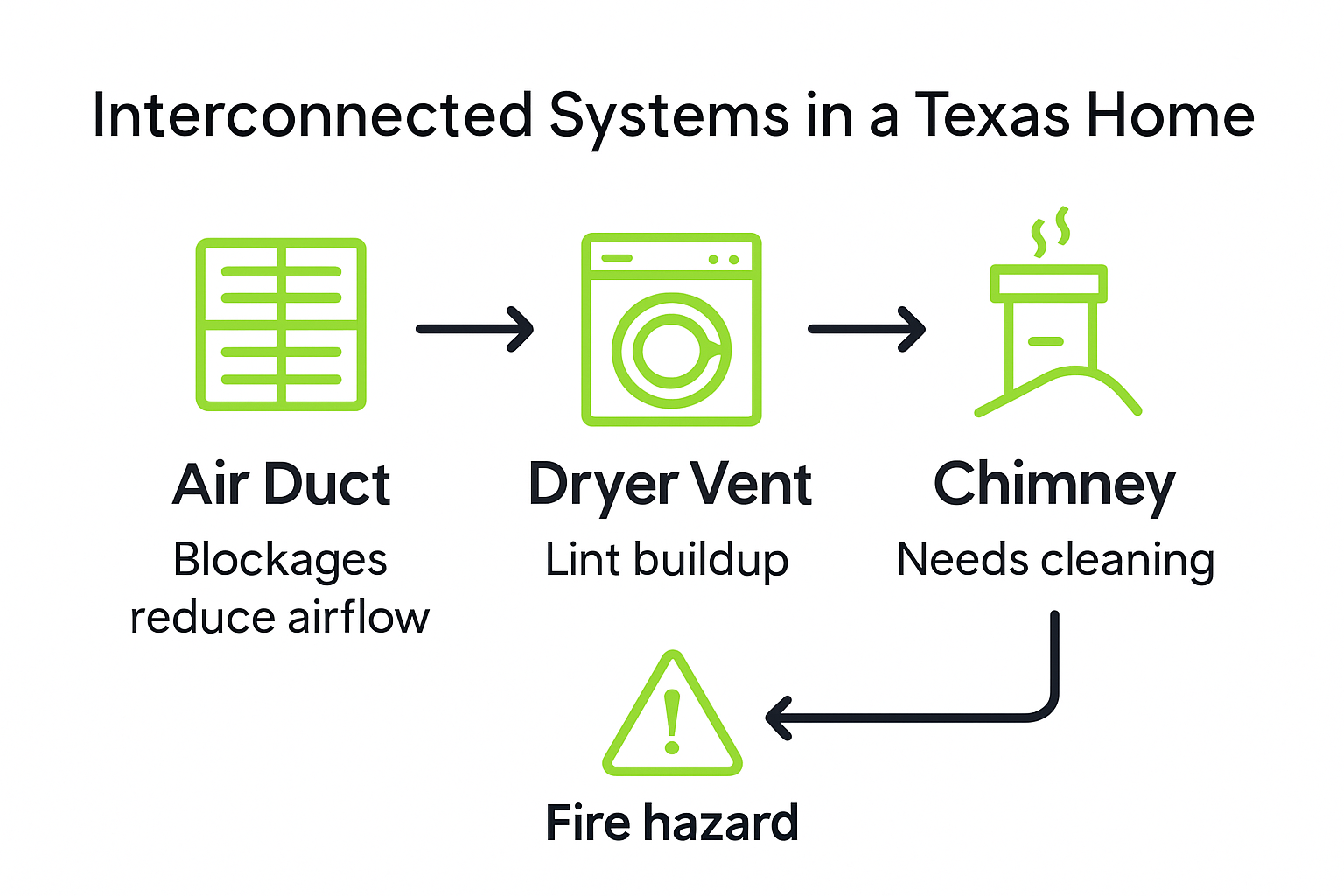
Modern home ventilation systems are more interconnected than ever before. Air ducts, dryer vents, and chimneys work together to manage airflow, temperature, and moisture levels. When one system becomes compromised, it can create a cascade of potential problems. For instance, a blocked dryer vent can increase humidity levels, leading to moisture buildup that damages chimney liners and creates conditions favorable for mold growth.
Texas homes face unique challenges due to extreme temperature variations and humidity levels. The interaction between these home systems requires careful monitoring and maintenance. Homeowners must recognize that a problem in one ventilation system can quickly impact the overall safety and efficiency of their home’s entire respiratory network.
Comprehensive Maintenance Strategies
Professional home maintenance in 2025 demands a holistic approach to ventilation system care. This means treating air ducts, dryer vents, and chimneys as interconnected components of a single system. Regular professional inspections should include comprehensive assessments that examine the relationships between these different ventilation pathways.
Key maintenance strategies include:
- Conducting annual professional inspections of all ventilation systems
- Cleaning air ducts and dryer vents to prevent lint and debris accumulation
- Checking for proper sealing and insulation of ventilation pathways
- Monitoring airflow dynamics and pressure balance in home systems
Texas homeowners must be particularly vigilant. The state’s unique climate creates additional challenges for home ventilation systems. Dust, humidity, and temperature extremes can accelerate wear and create additional risks that require proactive maintenance.
Ultimately, understanding the complex interactions between air ducts, dryer vents, and chimney systems is key to maintaining a safe home environment. By treating these systems as an interconnected network, homeowners can prevent potential hazards, improve overall home efficiency, and protect their most valuable asset. Professional maintenance is not just a recommendation it is an essential aspect of responsible home ownership in 2025.
To clarify the relationship between different home ventilation components and their risks, this table summarizes how air ducts, dryer vents, and chimneys interact and the hazards of neglecting each system:
| Component | Interconnected Function | Risk if Neglected |
|---|---|---|
| Chimney | Vents combustion gases, supports airflow | Fire hazard, CO buildup, backdraft |
| Air Ducts | Circulate air, balance home pressure | Stale air, pressure imbalances |
| Dryer Vents | Remove humid air and lint | Lint fire, moisture issues |
When to Call a Professional in Austin or San Antonio
Chimney maintenance requires expert intervention at specific points to ensure home safety and system efficiency. Texas homeowners in Austin and San Antonio must understand the critical moments when professional expertise becomes essential for preventing potential hazards and maintaining optimal chimney performance.
Critical Safety Warning Signs
About our expert home services emphasize the importance of recognizing early warning signs that demand professional attention. According to the Texas Department of Licensing and Regulation, periodic professional evaluations are crucial for identifying potential structural risks. Homeowners should immediately contact a professional chimney sweep if they notice:
- Unusual Crackling or Popping Sounds: Potential indication of structural damage or debris buildup
- Visible Cracks in Chimney Walls: Structural integrity compromises that require immediate assessment
- Smoke Backing Up into Living Spaces: Suggests serious ventilation blockages or system malfunctions
- Visible Rust or Corrosion: Potential signs of moisture intrusion or significant system degradation
These warning signs represent more than minor inconveniences they signal potential safety risks that could compromise your home’s structural integrity and your family’s health.
Annual Maintenance and Inspection Requirements
Doctor Flue’s chimney inspection checklist recommends annual professional evaluations, particularly for Texas homes exposed to extreme weather conditions. The San Antonio Edition of Angi Magazine specifically advises homeowners to schedule professional chimney sweeps before the primary heating season to prevent potential fire hazards.
Professional inspections in Austin and San Antonio should include:
- Comprehensive creosote buildup assessment
- Structural integrity evaluation
- Flue liner condition analysis
- Assessment of potential moisture damage
- Verification of proper ventilation systems
Regional Considerations for Texas Homeowners
Austin and San Antonio present unique environmental challenges that necessitate specialized chimney maintenance approaches. The region’s dramatic temperature fluctuations, humidity levels, and occasional severe weather events create additional stress on chimney structures.
Texas homeowners should consider professional intervention in these specific scenarios:
- After significant storms or extreme weather events
- When purchasing a new home
- If the chimney hasn’t been inspected in over a year
- When experiencing unexplained indoor air quality issues
- Before and after major home renovation projects
The cost of professional chimney maintenance represents a crucial investment in home safety. While DIY approaches might seem tempting, professional chimney sweeps bring specialized equipment, extensive training, and the ability to detect subtle issues that untrained eyes might miss.
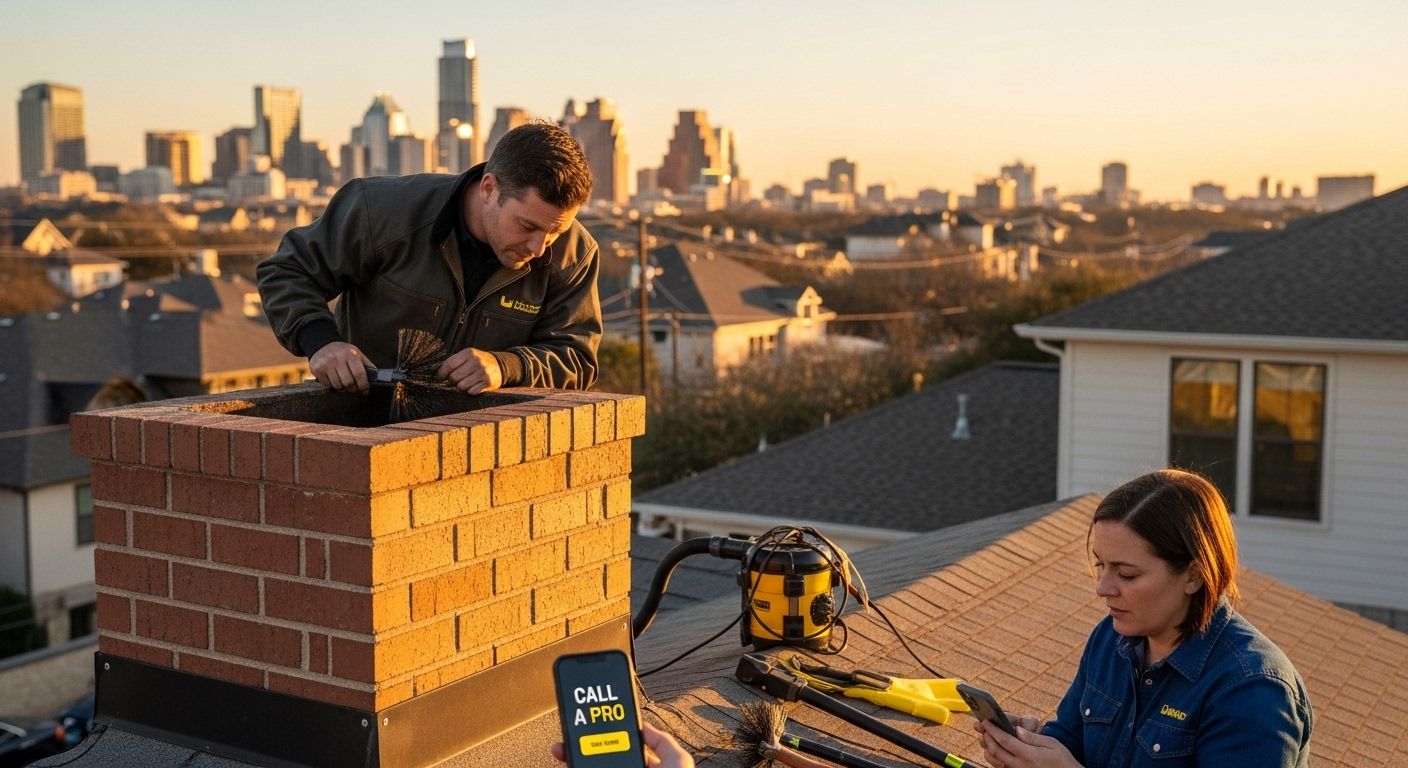
Ultimately, protecting your home means recognizing when professional expertise is not just recommended but essential. Austin and San Antonio homeowners who prioritize professional chimney maintenance demonstrate a commitment to their property’s longevity and their family’s safety. By understanding these critical intervention points, you transform chimney care from a reactive task to a proactive strategy of home preservation.
Frequently Asked Questions
What are the essential chimney maintenance tasks for homeowners in Texas?
Homeowners in Texas should prioritize annual professional inspections, creosote removal, structural assessments, chimney cap installation, and weatherproofing to maintain chimney safety and efficiency.
How can I identify if my chimney needs professional maintenance?
Look for unusual crackling or popping sounds, visible cracks in the chimney walls, smoke backing up into living spaces, or signs of rust and corrosion, which all indicate a need for professional assessment.
Why is chimney maintenance important for wildlife conservation?
Proper chimney maintenance helps protect local wildlife, particularly Chimney Swifts, by ensuring that chimneys do not become nesting sites, thus balancing home safety and environmental responsibility.
How does maintaining air ducts and dryer vents impact chimney safety?
Neglecting air ducts and dryer vents can create airflow issues that lead to dangerous chimney backdrafts or improper venting of harmful gases. Regular maintenance of these systems is crucial for overall home safety.
Protect Your Texas Home with Expert Chimney and Air Quality Care
Have concerns about creosote buildup, wildlife intrusion, or hidden safety hazards in your chimney? You are not alone. Many Texas homeowners struggle to keep up with the in-depth maintenance tasks outlined in our Chimney Maintenance Checklist. Overlooking just one part can risk fire, poor indoor air, or even costly repairs. Your peace of mind depends on more than just sweeping the flue. It takes a trusted partner with real expertise in home air quality and preventive upkeep. Check out our Uncategorized Archives for more homeowner guides and practical tips.
Take control of your chimney health and home safety today. Choose Green Home Duct Cleaning for professional care that keeps you ahead of hazards and supports a cleaner, safer environment for your family. Schedule your comprehensive appointment now and see the difference trusted local service makes.
Recommended
- Chimney Cleaning Safety Tips for Texas Homeowners 2025 – Green Home Services
- Chimney Cleaning for New Homeowners in Texas: 2025 Guide – Green Home Services
- Chimney Maintenance Tips for Texas Homeowners in 2025 – Green Home Services
- Chimney Cleaning for Rental Properties in Texas: 2025 Guide – Green Home Services

Green Home Services is a trusted provider of air duct, dryer vent and chimney cleaning across San Antonio and Austin, Texas.