
When should you replace your dryer vent hose?
A dryer vent hose should be replaced if it's made of plastic or foil, both fire hazards restricted by code in many areas, or if it shows visible tears, crushing, or heavy lint buildup, or hasn't been changed in several years. Rigid or semi-rigid metal venting is the safest replacement option since it resists kinking and heat damage better than flexible materials. A damaged hose restricts airflow and raises fire risk. Green Home Services inspects and replaces dryer vent hoses for homes across San Antonio and Austin.
Most people never think about their dryer hose when doing laundry. Yet this simple tube has a huge impact on not just efficiency but safety. Here is something you probably did not know: malfunctioning or outdated dryer hoses are a major factor in thousands of household fires every year. You might expect the bigger hazard to be electrical or mechanical failure, but it is often a neglected piece of flexible tubing that holds the real risks and potential for savings.
Table of Contents
- What Is A Dryer Hose And Its Role In Appliance Function?
- Why Replacing Your Dryer Hose Matters For Safety And Efficiency
- How A Dryer Hose Works: A Closer Look At Ventilation
- Key Signs That Indicate You Should Replace Your Dryer Hose
- The Impact Of Material And Maintenance On Dryer Hose Longevity
Quick Summary
| Takeaway | Explanation |
|---|---|
| Regularly inspect your dryer hose. | Check for wear, damage, or lint buildup to ensure safety and efficiency. |
| Use high-quality rigid metal hoses. | They reduce fire risks and improve airflow compared to plastic alternatives. |
| Replace your dryer hose when needed. | Signs like prolonged drying times and visible damage indicate it’s time for a replacement. |
| Maintain optimal hose length and configuration. | Short, direct routes with minimal bends improve airflow and dryer efficiency. |
| Clean lint traps frequently. | Regular cleaning helps prevent fires and extends the lifespan of the dryer hose. |
What is a Dryer Hose and Its Role in Appliance Function?
A dryer hose is a critical component of your clothes dryer system that serves as the vital pathway for hot, moisture-laden air to exit your appliance and home. These flexible or rigid tubes connect your dryer to the exterior wall, facilitating proper ventilation and preventing potential safety hazards.
Understanding the Basic Structure
Typically constructed from flexible aluminum, rigid metal, or semi-rigid materials, dryer hoses are designed to withstand high temperatures and transport exhaust air efficiently. Learn more about dryer vent configurations that help maintain optimal appliance performance. The hose must create a direct, unobstructed route from your dryer to the external vent, minimizing potential risks associated with improper installation.
The primary functions of a dryer hose include:
- Removing hot, humid air generated during the drying process
- Preventing lint accumulation inside the dryer and ductwork
- Maintaining proper airflow to support efficient machine operation
Critical Performance Considerations
According to the U.S. Department of Energy, proper dryer hose configuration is essential for both energy efficiency and safety. A well-maintained hose ensures that your dryer operates at peak performance, reducing energy consumption and minimizing potential fire risks. Homeowners should regularly inspect their dryer hose for signs of wear, damage, or lint buildup that could compromise its functionality.
The material and length of your dryer hose significantly impact its effectiveness. Shorter, more direct routes with minimal bends allow for optimal airflow, while excessively long or kinked hoses can restrict ventilation and force your appliance to work harder. Rigid metal hoses are generally recommended over plastic alternatives due to their superior durability and reduced fire risk.
To help you choose the best option for your home, the following table compares common dryer hose materials based on features and safety considerations mentioned in the article.
| Hose Material | Heat Resistance | Durability | Fire Risk | Lint Accumulation |
|---|---|---|---|---|
| Rigid Metal (Aluminum/Galvanized Steel) | Excellent | High | Low | Minimal due to smooth surface |
| Semi-Rigid Metal | Very Good | Good | Low | Reduced compared to plastic |
| Flexible Plastic | Poor | Low | High | High, especially in bends |
| Accordion-Style Foil | Moderate | Low | High | High due to creases |
Why Replacing Your Dryer Hose Matters for Safety and Efficiency
Replacing your dryer hose is far more than a routine maintenance task. It represents a critical intervention that directly impacts your home’s safety, energy efficiency, and overall appliance performance. Homeowners often overlook this simple component, not realizing the potential risks associated with an aging or damaged dryer hose.
Fire Prevention and Safety Risks
According to the U.S. Fire Administration, dryer-related fires are a significant household hazard. Damaged or outdated dryer hoses contribute substantially to these risks. Lint accumulation, restricted airflow, and material degradation can create perfect conditions for potential fire incidents.
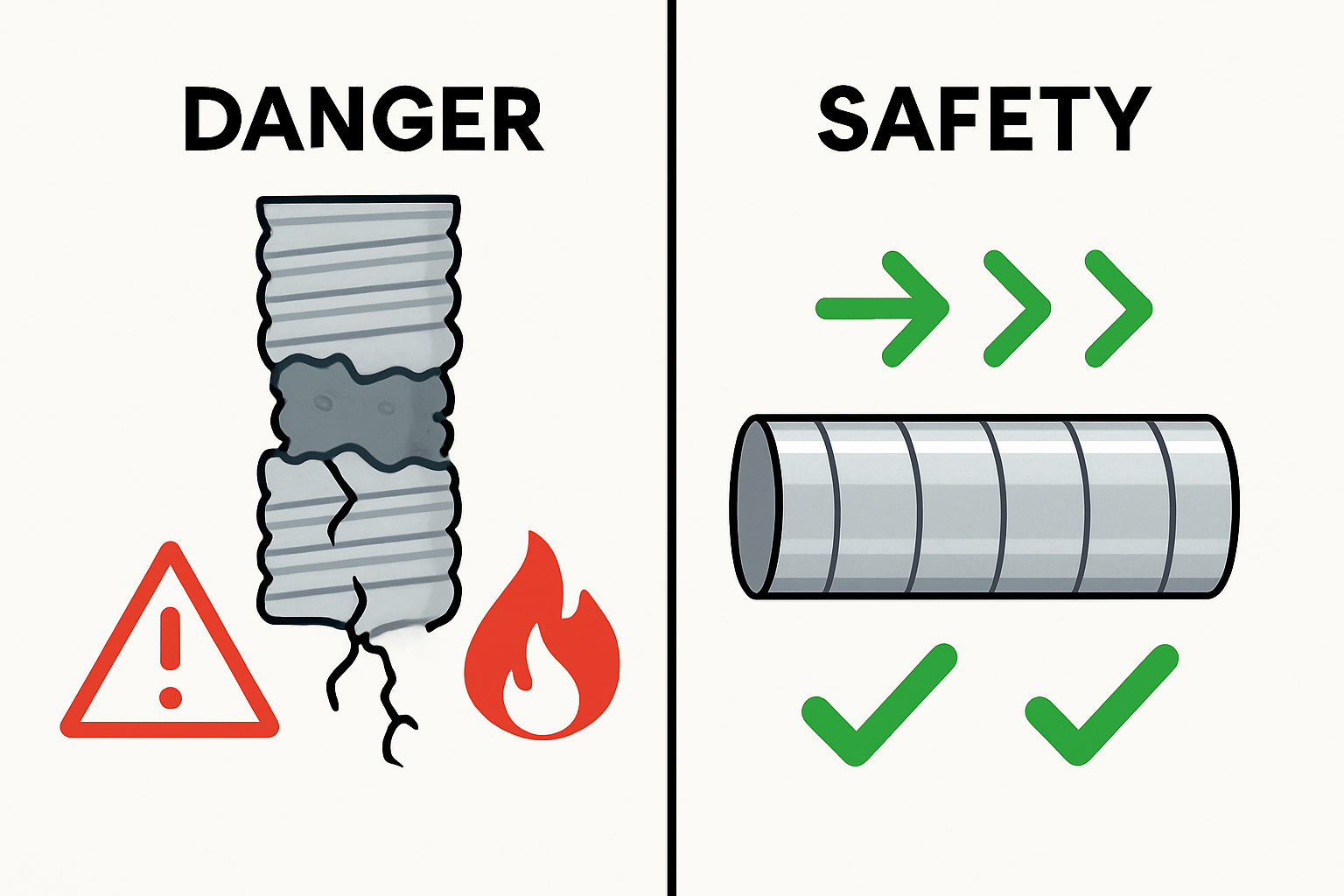
Learn about common dryer vent misconceptions that could be putting your home at risk.
Key safety considerations include:
- Preventing lint buildup that could spark a fire
- Reducing potential overheating of your dryer
- Eliminating potential fire hazards from damaged or crushed hoses
Energy Efficiency and Performance Impact
A compromised dryer hose directly affects your appliance’s operational efficiency.
When the hose becomes clogged, kinked, or damaged, your dryer must work harder to expel hot air, resulting in increased energy consumption and longer drying times. Modern dryer hoses designed with smooth interiors and optimal routing can reduce energy usage by up to 30%, translating to noticeable savings on utility bills.
The material of your dryer hose plays a crucial role in maintaining efficiency. Rigid metal hoses with minimal bends provide the most direct path for exhaust air, reducing strain on your dryer’s motor and improving overall performance. By proactively replacing your dryer hose, you ensure maximum airflow, minimal energy waste, and extended appliance lifespan.

How a Dryer Hose Works: A Closer Look at Ventilation
The dryer hose functions as a critical ventilation pathway, facilitating the complex process of heat and moisture removal during the clothes drying cycle. This seemingly simple tube plays a sophisticated role in maintaining your appliance’s performance and your home’s indoor air quality.
The Mechanics of Air Movement
Explore the intricacies of dryer ventilation systems to appreciate the engineering behind this essential component. When your dryer operates, it generates significant heat and moisture from wet clothing. The dryer hose acts as a dedicated escape route, channeling hot, lint-laden air from the machine’s interior to the external environment. The hose creates a pressure differential that actively pushes exhaust air outward, preventing moisture accumulation and potential overheating.
Key air movement principles include:
- Creating a direct path for hot air evacuation
- Maintaining consistent airflow resistance
- Minimizing potential blockage points
Thermal and Moisture Management
According to the Environmental Protection Agency, effective moisture control is crucial for preventing indoor air quality issues. The dryer hose serves as a critical component in this process, efficiently transporting humid air outside and preventing potential condensation problems. The material and design of the hose significantly impact its thermal management capabilities.
Rigid metal hoses with smooth interior surfaces provide optimal performance by:
- Reducing friction and airflow resistance
- Minimizing lint accumulation
- Supporting consistent temperature regulation
By understanding the intricate workings of your dryer hose, you can appreciate its role beyond a simple conduit—it is a precision-engineered system designed to protect your appliance, home, and indoor environment.
Key Signs That Indicate You Should Replace Your Dryer Hose
Identifying when your dryer hose needs replacement is crucial for maintaining home safety and appliance efficiency. While many homeowners overlook this component, certain warning signs clearly indicate it is time for a dryer hose upgrade.
Performance and Efficiency Warning Signals
Discover the telltale signs of dryer vent problems that suggest immediate attention. Prolonged drying times and unusually hot clothing are critical indicators of potential dryer hose issues. When your dryer requires multiple cycles to dry a single load or clothes emerge extremely hot to the touch, it signals restricted airflow and potential hose degradation.
Key performance warning signs include:
- Clothes taking significantly longer to dry than usual
- Excessive heat generation during drying cycle
- Noticeable decrease in overall dryer efficiency
Physical Condition and Material Degradation
According to Consumer Reports, certain physical characteristics definitively indicate dryer hose replacement is necessary. Visible damage such as tears, kinks, or punctures compromise the hose’s structural integrity and ventilation capabilities. Plastic or accordion-style hoses are particularly problematic, as they are more susceptible to damage and lint accumulation.
Critical physical indicators include:
- Visible tears or punctures in the hose material
- Significant kinks or crushing that restrict airflow
- Signs of rust, corrosion, or material breakdown
- Presence of plastic or foil accordion-style ducting
Proactive homeowners recognize that a compromised dryer hose is not just an inconvenience but a potential safety hazard. Regular inspection and timely replacement can prevent costly repairs and reduce fire risks associated with malfunctioning dryer ventilation systems.
The table below summarizes the main warning signs suggesting your dryer hose needs replacement, helping you quickly identify potential safety or efficiency issues.
| Warning Sign | What It Means | Underlying Cause |
|---|---|---|
| Prolonged drying times | Poor airflow, reduced efficiency | Hose kinked, clogged, or degraded |
| Excessive heat from dryer or clothing | Overheating and potential fire risk | Restricted ventilation |
| Visible tears or punctures in hose | Compromised safety and ventilation | Physical damage or material breakdown |
| Significant kinks or crushing | Severely limited airflow | Hose bent or compressed |
| Rust, corrosion, or material breakdown | Decreased structural integrity | Aging or poor-quality materials |
| Presence of plastic or accordion-style ducting | Increased fire and lint risk | Use of unsafe or outdated hose type |
The Impact of Material and Maintenance on Dryer Hose Longevity
The durability of your dryer hose depends on two critical factors: the quality of its material and the consistency of maintenance practices. Understanding these elements can significantly extend the lifespan of your dryer’s ventilation system and prevent potential safety hazards.
Material Quality and Performance
Explore the nuances of dryer vent systems to comprehend how material selection impacts longevity. Rigid metal hoses outperform flexible plastic alternatives by offering superior heat resistance and structural integrity. Aluminum and galvanized steel hoses provide optimal performance, with smooth interior surfaces that minimize lint accumulation and reduce friction during air movement.
Key material performance characteristics include:
- Resistance to high temperatures
- Ability to maintain structural shape
- Minimal internal friction for airflow
- Corrosion and rust resistance
Maintenance Practices and Wear Prevention
According to the U.S. Fire Administration, maintenance is crucial in preventing dryer-related incidents. Regular cleaning and inspection can extend your dryer hose’s functional lifespan by up to 50%. Homeowners should focus on preventing lint buildup, checking for potential damage, and ensuring consistent airflow through the ventilation system.
Critical maintenance practices include:
- Cleaning lint traps after every drying cycle
- Performing annual professional vent inspections
- Checking for potential kinks or obstructions
- Replacing damaged sections immediately
By prioritizing high-quality materials and implementing consistent maintenance routines, homeowners can significantly enhance their dryer hose’s durability and maintain optimal appliance performance.
Ready to Protect Your Home with a Safer, More Efficient Dryer Hose?
If you have noticed longer drying times, excessive heat, or visible damage to your dryer hose, these are more than minor inconveniences. As our article explains, damaged or outdated dryer hoses put your family at risk and can drain your energy budget. Preventing a potential fire and reducing wasted energy are critical to maintaining a safe, comfortable home.

Take charge of your home’s indoor air quality and safety today. The pros at Green Home Duct Cleaning in San Antonio and Austin specialize in thorough inspections and eco-friendly upgrades tailored to your needs. Let us help you avoid costly repairs and safeguard your space with a professional dryer hose replacement. Do not wait for an emergency to act. Contact us now to schedule your expert service and experience the peace of mind that comes from trusted local care.
Frequently Asked Questions
What are the signs that indicate I should replace my dryer hose?
You should replace your dryer hose if you notice prolonged drying times, excessive heat during the drying cycle, visible damage like tears or kinks, or if your dryer is exhibiting decreased efficiency.
Why is it important to maintain and replace my dryer hose?
Regular maintenance and timely replacement of your dryer hose are crucial for preventing safety hazards, reducing fire risks from lint accumulation, and ensuring your dryer operates efficiently, thereby saving energy and reducing utility bills.
What materials are recommended for dryer hoses, and why?
Rigid metal hoses, such as those made of aluminum or galvanized steel, are recommended over plastic or foil accordion-style ducts due to their superior heat resistance, structural integrity, and lower risk of lint accumulation, which enhances safety and performance.
How can I prolong the lifespan of my dryer hose?
You can prolong the lifespan of your dryer hose by regularly cleaning lint traps, performing annual inspections, checking for damage or blockages, and using high-quality materials that withstand high temperatures and wear.
Recommended
- Understanding How Dryer Vents Work for Homeowners – Green Home Services
- Dryer Vent Cleaning Myths Texas Homeowners Need to Know – Green Home Services
- Dryer Vent vs Duct: What Texas Homeowners Need to Know – Green Home Services
- Top Signs Dryer Vent Needs Cleaning for Texas Homeowners – Green Home Services

Green Home Services is a trusted provider of air duct, dryer vent and chimney cleaning across San Antonio and Austin, Texas.