
Can duct sealing make cold rooms warmer?
If some rooms stay cold while the heat runs, leaky ducts are a common reason. Leaks let warmed air escape into the attic or walls before it reaches the vent, so weak airflow and uneven temperatures follow. Duct sealing closes gaps at joints, seams, and connections, so more heated air arrives where you want it. Sealing will not fix every cold room, so a quick check of filters, vents, and insulation helps confirm the cause.
Key Takeaways
- Leaky ducts waste heated air and can leave far-end or upstairs rooms noticeably cooler.
- ENERGY STAR reports that a typical forced-air home loses 20 to 30 percent of duct airflow to leaks and loose connections.
- Common culprits include loose joints, disconnected runs, crushed flex duct, and gaps around boots and registers.
- Mastic or metal tape is the recommended sealing method. Standard duct tape is not long-lasting.
- Filters, closed vents, insulation, and system size can also cause cold rooms, so rule those out too.
Why Some Rooms Never Seem to Warm Up
Most homeowners respond to a cold room by turning up the thermostat, which warms the rooms that were already comfortable and does little for the one that is not. The real issue is usually airflow. A forced-air system works by delivering warmed air through ducts to each room, and when the air does not arrive, the room does not warm.
Plenty of things can interrupt that delivery, and leaks are one of the most common. If a duct running through an unheated attic has a gap at a joint, warm air escapes into that space instead of continuing down the line. The room at the end of the run receives less air, and the attic gets heated for free. Over time, you pay for energy that never reaches the living space.
Central Texas homes are especially prone to this pattern because so many ducts run through attics. Summer heat bakes joints and sealant, and winter cold then makes the temperature difference across the duct wall larger. Add decades of vibration and small movements, and joints that started out tight can open up.
How Much Air Do Leaky Ducts Lose?
ENERGY STAR states that in a typical home with forced-air heating and cooling, 20 to 30 percent of the air moving through the ducts is lost to leaks, holes, and loose connections. The same page lists rooms that are hard to heat or cool, stuffy rooms, and ducts in attics, crawl spaces or garages among the signs that duct performance may be poor. These are averages, and your own home could be better or worse, which is why testing and inspection matter.
A loss of that size is not a small detail. If a quarter of the heated air never reaches a vent, the system runs longer to compensate, and some rooms still fall short. Fixing the leaks means more of the air the system has already heated arrives where you wanted it.
Where Duct Leaks Usually Hide
| Location | Typical problem | Effect on comfort |
|---|---|---|
| Joints and seams between duct sections | Original sealing has dried, cracked, or never been applied | Warm air leaks into attic or wall cavities |
| Connections at the plenum and trunk lines | Loose collars, gaps around fittings | Reduced airflow to the whole system or a branch |
| Boots and registers | Gaps where the duct meets the floor, wall, or ceiling | Air leaks behind the vent and weak airflow in the room |
| Flexible duct runs | Kinks, sagging, crushed sections, or pulled-apart ends | Restricted airflow to far rooms |
| Return ducts | Leaks that pull in attic or crawlspace air | Poor circulation and dusty or uncomfortable air |
ENERGY STAR specifically points to the places where vents and registers meet floors, walls, and ceilings as common leak spots. Many of these gaps are hidden inside attic spaces or behind finished surfaces, so they are not visible without opening access points or testing the system.
Is It a Leak or Something Else?
Duct leaks are common but not the only reason for a cold room. Before you assume sealing is the answer, run through a short checklist. Many of these checks cost little and take only a few minutes.
| Check | What to look for | If you find it |
|---|---|---|
| Air filter | Dirty or clogged filter | Replace it. Restricted airflow affects every room |
| Vents and registers | Closed, blocked, or covered by furniture or rugs | Open and clear them |
| Doors and return paths | Closed doors with no return air path | Leave doors open or ask about a transfer path |
| Windows and insulation | Drafts, bare windows, thin attic insulation above the room | Address the envelope, then reassess |
| Airflow strength | Weak air from one or two vents while others are strong | Suggests a leak, disconnection, or kink in that run |
| System size and age | Equipment that struggles in cold weather or runs constantly | Ask for a system evaluation |
If a particular vent has very weak airflow while others are strong, that points toward a problem with that branch of the ducts. Our article on poor airflow in the house goes through the common causes, and our guide to improving indoor airflow at home covers steps you can take yourself.
One room always colder than the rest? Green Home Services serves San Antonio and Austin. Request a free quote or call (210) 757-4531 to have the ducts checked.
What Duct Sealing Involves
Sealing starts with finding the leaks. Technicians inspect accessible ducts, look for disconnected or damaged sections, and check connections at the equipment and at each vent. The goal is to understand where air is going before changing anything.
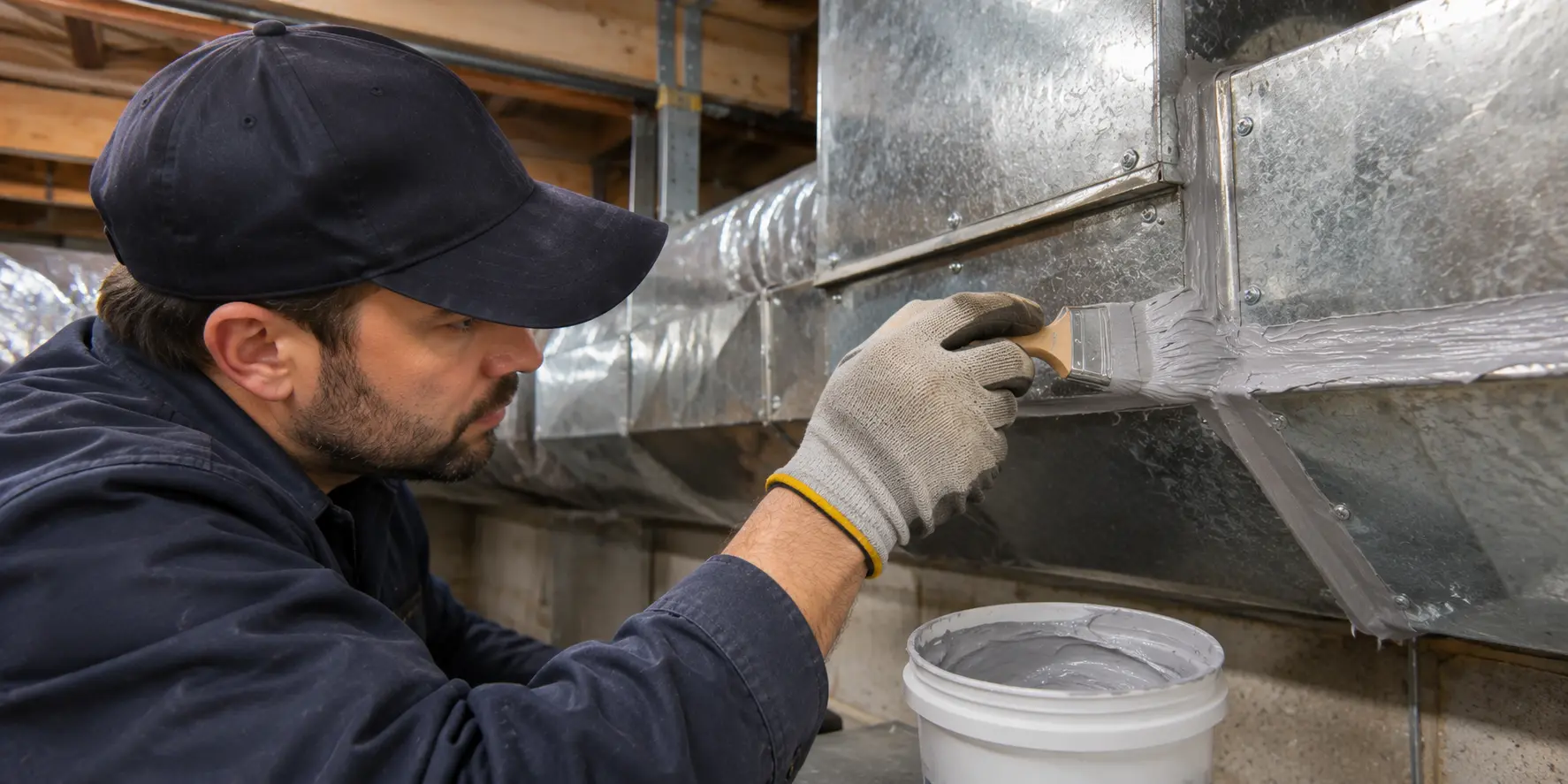
The repair itself uses materials designed for the job. ENERGY STAR recommends mastic sealant or metal tape and notes that standard duct tape is not long-lasting. Larger gaps may need to be reconnected or supported before sealing, and damaged flexible duct may need to be replaced. Exposed ducts in unconditioned spaces are often insulated afterward so that the air inside keeps its temperature on the way to the room.
Our air duct sealing service follows this approach. For a more detailed walkthrough, see our article on how to seal leaky ducts, which explains what the work looks like in practice.
Sealing, Cleaning and Repair Are Different Jobs
Homeowners sometimes assume that a duct cleaning will fix a cold room, or that sealing will clean the system. The two jobs address different problems. Cleaning removes dust and debris from inside the ducts. Sealing closes gaps in the duct walls and connections. Repair replaces or reconnects damaged sections. Some homes need one, some need two, and some need all three.
| Service | What it addresses | Likely symptom it helps with |
|---|---|---|
| Duct sealing | Leaks at joints, seams, and connections | Cold or hot rooms, weak airflow, high energy use |
| Duct cleaning | Dust and debris inside the duct system | Visible dust at vents, stale smells |
| HVAC repair and maintenance | Equipment, airflow, and mechanical issues | System that runs constantly or cycles poorly |
Our article on the difference between cleaning and sealing ducts explains how to decide, and our residential HVAC maintenance and repairs service covers equipment-related causes. The EPA does not recommend routine duct cleaning, only cleaning when it is needed, so a good provider will explain what your system actually needs and why.
What Comfort Improvement Can You Expect?
Results vary by home. If leaks are the main reason a room stays cool, sealing should improve airflow to that room and reduce the amount of heated air escaping into unconditioned spaces. If the underlying cause is something else, such as missing insulation or an undersized system, sealing will help but may not fully solve the problem.
That is why a good provider starts with diagnosis. It is better to hear that sealing is only part of the answer than to pay for work that was never going to fix the room. For a broader view of what sealing can do, our article on the benefits of duct sealing for comfort and savings explains the main advantages without overpromising.
Planning for Central Texas Homes
Many San Antonio and Austin houses have ducts in the attic, a layout that makes sealing and insulation especially relevant. Summer attic temperatures are extreme and winter nights can be cold, so duct materials experience a wide range of conditions in a single year. A duct system that was acceptable when the home was built can develop leaks over time.
If you live in the area, our San Antonio location page shows where we work, and our article on air duct sealing for Austin homeowners covers considerations for homes on that side of the corridor. Scheduling an inspection before the coldest weeks gives you time to choose a repair without rushing.
Frequently Asked Questions
Can duct sealing make cold rooms warmer?
It can, when leaks are the cause. Sealing stops heated air from escaping before it reaches the vent, so more of it arrives in the room. If the problem comes from closed vents, a dirty filter, missing insulation, or an undersized system, sealing may help only partly. An inspection shows which causes apply.
How do I know if my ducts are leaking?
Signs include rooms that are hard to heat or cool, weak airflow from some vents, dusty air, high energy bills, and ducts in attics or crawl spaces that look loose, sagging or disconnected. Many leaks are hidden, so a professional inspection or test is the reliable way to find them.
Can I seal my own ducts?
Accessible leaks can sometimes be sealed with mastic or metal tape, but ENERGY STAR cautions against using regular duct tape because it is not long-lasting. Attic work carries heat, insulation, and fall hazards, and many leaks are out of sight. A professional can reach and test areas that homeowners usually cannot.
Will duct sealing lower my energy bill?
It may, since less conditioned air is wasted when leaks are closed, but the amount varies by home and cannot be promised. Other factors such as insulation, equipment efficiency, and thermostat habits also matter. A provider should explain what is likely for your home instead of quoting a fixed saving.
Is duct sealing the same as duct cleaning?
No. Sealing closes gaps and leaks in the duct walls and connections to improve airflow and efficiency. Cleaning removes dust and debris from inside the ducts. They solve different problems, and some homes benefit from both. A good provider will tell you which one fits what you are seeing.
Get Every Room Comfortable This Winter
If a room in your home stays cold while the heat runs, the ducts are worth checking. Contact us to schedule an inspection. We serve homes across San Antonio and Austin and can help you decide whether sealing, repair, or a simple adjustment is the right next step.

Green Home Services is a trusted provider of air duct, dryer vent and chimney cleaning across San Antonio and Austin, Texas.