
What are the most common winter chimney problems?
The most common winter chimney problems are creosote and soot buildup, blocked flues from nests or debris, cracked crowns and masonry, failing flashing, damaged or missing caps, and poor draft that sends smoke into the room. Most start small and grow quietly. A yearly inspection catches them early, and stopping use of the fireplace at the first sign of smoke, odor, or visible damage keeps a minor repair from becoming a safety issue.
Key Takeaways
- Buildup, blockages, and water entry cause most winter chimney trouble.
- Many problems cannot be seen from the living room, so a yearly inspection matters even for light use.
- Smoke in the room, strong odors, falling mortar, and animal noises are all reasons to stop using the fireplace.
- Small repairs to the crown, cap, or flashing cost far less than repairs after water has soaked the masonry.
- Central Texas fireplaces often sit idle for long stretches, which makes pre-season checks especially important.
Why Winter Exposes Chimney Problems
A chimney works quietly for most of the year. It does not draw until the first cold evening, and that is when hidden problems show up as smoke, smells, or noises. Winter also puts a heavier load on the system, because it is the season when heat, combustion byproducts, and moisture are all moving through the flue at once.
In San Antonio and Austin, the pattern is a little different from colder regions. Winters are shorter and milder, so many homeowners light the fireplace only a few times. Long idle periods give animals time to move in, give summer storms time to damage the crown and flashing, and let small defects go unnoticed. The result is that the first fire of the season is often the first warning.
The Chimney Safety Institute of America recommends an annual inspection by a qualified professional, and the U.S. Fire Administration advises homeowners to have chimneys cleaned and inspected every year. The sections below explain what that inspection is looking for.
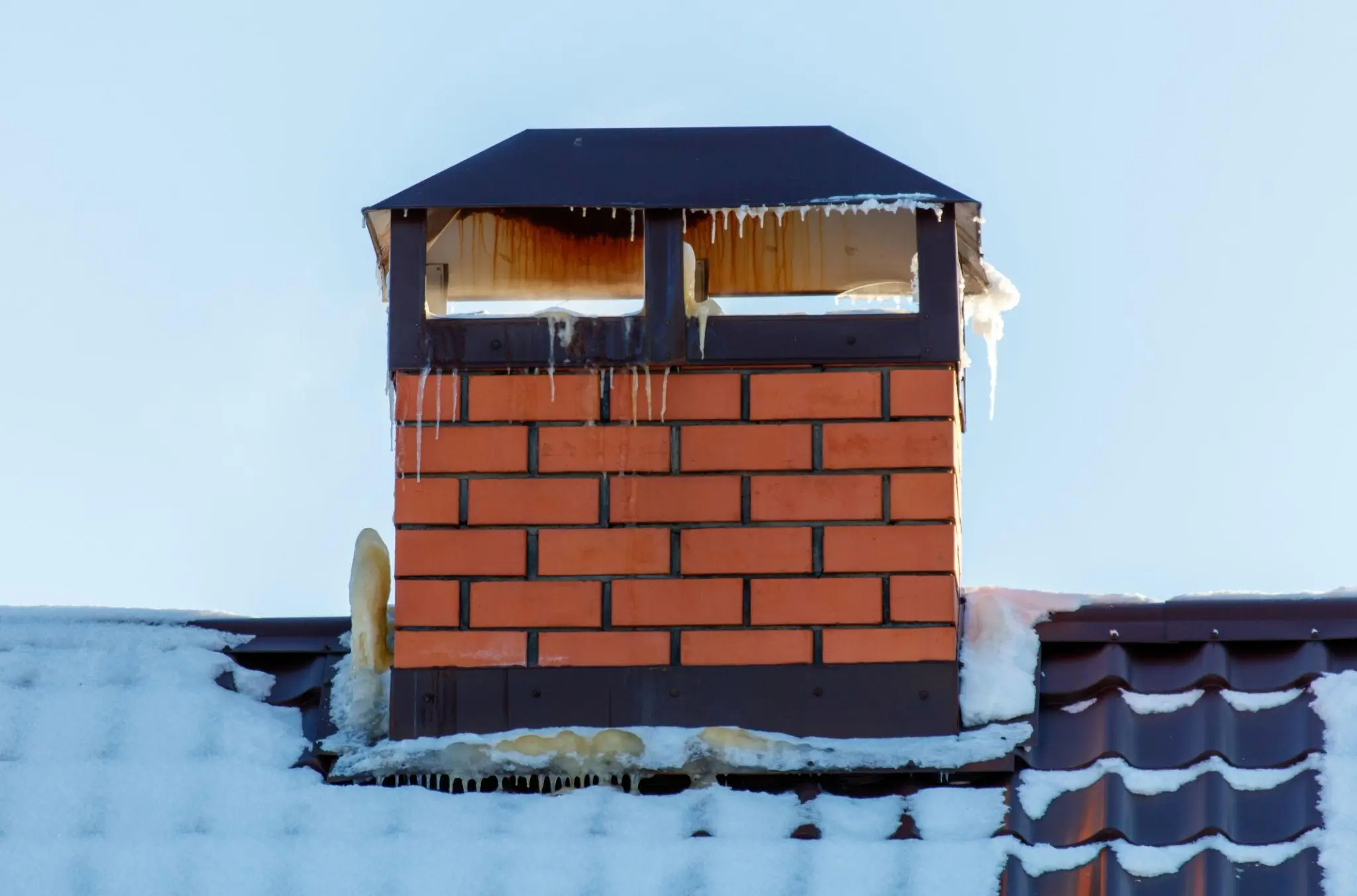
The Six Problems Homeowners Run Into Most
| Problem | Typical signs | Why it matters |
|---|---|---|
| Creosote and soot buildup | Black, shiny or flaky deposits, strong smoky smell when cold | Residue in the flue can ignite and reduces draft |
| Blocked flue or nest | Smoke backing up, scratching or chirping, debris in the firebox | Smoke and gases cannot leave the house |
| Cracked crown or masonry | Visible cracks on top, loose bricks, crumbling mortar | Lets water into the structure |
| Failing flashing | Water stains on the ceiling near the chimney, rust at the roof line | Leaks at the roof joint damage framing and finishes |
| Damaged or missing cap | Rain in the firebox, animals in the flue, bent or rusted metal | Opens the flue to water and wildlife |
| Poor draft | Smoke rolling into the room, fire that will not stay lit | Can indicate a blockage, a closed damper or a design issue |
Creosote and Soot Buildup
Every wood fire leaves residue behind. Soot is the lighter, powdery layer. Creosote is the tar-like or hardened deposit that forms when smoke cools on the flue walls, and it is flammable. Wet wood, a smoldering fire and a cold flue all make buildup worse. CSIA explains that creosote is highly combustible, which is why cleaning is treated as a safety step and not just a housekeeping chore.
Homeowners usually notice buildup as a sharp smoky smell, especially on humid days, or as dark flakes in the firebox. A professional chimney sweeping and cleaning visit removes the deposits and gives the inspector a clear view of the flue. Our guide to chimney cleaning during winter in Texas covers how timing affects the work.
Blockages, Nests and Debris
Birds, squirrels, raccoons and other animals look for warm, sheltered cavities, and an uncapped or damaged chimney offers one. Leaves, twigs and fallen mortar can also settle in the flue and narrow the passage. CSIA notes that animals may build nests in the flue, which is one reason even a rarely used chimney should be checked each year.
A partial blockage may show up as slow-drawing fires or smoke spilling into the room. A full blockage is more dangerous because exhaust gases, including carbon monoxide from gas-fired and wood-burning appliances, can be forced back into the home. If you hear scratching, chirping, or movement inside the chimney, do not light a fire. Our chimney nest and animal removal service is designed for exactly this situation.
Cracked Crowns and Deteriorating Masonry
The crown is the masonry or concrete layer at the top of the chimney that sheds water away from the flue and the brick below. When it cracks, water follows the cracks into the structure. Central Texas does not see long freezing winters, but occasional hard freezes do happen, and summer heat followed by heavy rain also stresses older masonry. Over time, the result can be loose bricks, flaking mortar, and moisture stains.
Look at the chimney from the ground with binoculars if you can do so safely. Do not climb onto the roof yourself. Visible cracks at the top, white powdery deposits on the brick, or mortar crumbling at the joints all deserve a closer look. A professional can evaluate chimney crown condition and recommend repair or rebuilding. For broader masonry issues, see our article on chimney masonry repairs for Texas homeowners.
Flashing and Roof-Line Leaks
Flashing is the metal that seals the joint where the chimney meets the roof. It is one of the most common leak points on any house, because the seal has to survive sun, wind, and rain. Rust, lifted edges, and dried-out sealant all create gaps. A leak here often shows up as a brown stain on the ceiling or wall near the chimney rather than inside the firebox, which makes it easy to misdiagnose as a roof leak.
If you see staining around the chimney after rain, have the flashing checked. A dedicated flashing installation and repair visit addresses the joint directly. Waiting tends to make the repair bigger, because water can reach framing and insulation before it ever shows on the surface.
Caps, Dampers and Poor Draft
A chimney cap covers the flue opening, keeps out rain and animals, and often includes a screen to catch sparks. A bent, rusted, or missing cap is an easy fix that prevents several other problems. Dampers can also fail. A damper that sticks, warps, or will not seal can cause drafts when the fireplace is idle and smoke problems when it is lit.
Draft problems have several possible causes, from a closed damper to a blocked flue to a house that is too airtight for the fireplace to pull air. Our article on why your fireplace smokes inside the house walks through the likeliest explanations in order, so you can describe symptoms accurately when you call for help.
What You Can Check Yourself and What to Leave Alone
Homeowners can do a quick, safe visual check without touching the roof or the flue. Do this while the fireplace is cold.
| Safe for you to do | Leave to a professional |
|---|---|
| Look into the firebox with a flashlight for debris, cracks, and soot | Climbing onto the roof to inspect the crown, cap or flashing |
| Open and close the damper to confirm it moves freely | Removing nests or animals from the flue |
| Check ceilings and walls near the chimney for stains | Scraping creosote or testing the flue liner |
| Look at the top of the chimney from the ground with binoculars | Repairing flashing, crowns, or masonry |
Treat anything unusual as a reason to wait. A professional chimney inspection will look at the parts a visual check cannot reach and explain what needs attention now and what can wait.
Not sure what you are seeing? Green Home Services serves San Antonio and Austin homeowners. Request a free quote or call (210) 757-4531 and describe what you have noticed.
Warning Signs That Mean Stop Using the Fireplace
Some signs should end the evening’s fire right away. Smoke or odor entering the living space, a visible gap in the firebox, pieces of brick or mortar falling, rain or water in the hearth, a carbon monoxide alarm sounding, and animal noises from the flue are all in this category. Put the fire out safely, ventilate the room if an alarm has sounded, and leave the fireplace off until it has been inspected.
It is also worth watching for slower signs: a damp patch that appears after every storm, a persistent musty smell near the fireplace, or white staining on the exterior brick. Slow signs are easy to ignore because nothing dramatic happens, yet they often point to water entering the structure and can lead to more extensive repairs.
Planning Maintenance Around a Texas Winter
The simplest approach is to schedule inspection and cleaning in early fall, before demand peaks, then handle any repairs while the weather is still dry. If you already have a chimney that has not been inspected in more than a year, treat that as the first task before lighting a fire.
Homeowners in San Antonio and Austin can combine the inspection with a cap or crown check, since those are the two components most affected by summer storms. If you have an older home, add the flue liner and firebox condition to the list. Keeping a short record of each visit makes it easier to spot patterns over time.
Frequently Asked Questions
What is the most common chimney problem in winter?
Buildup of soot and creosote is the most common, because every wood fire leaves residue. Close behind are blockages from nests or debris and water entry through the crown, cap or flashing. Since many of these cannot be seen from inside the house, a yearly professional inspection is the most reliable way to find them.
How do I know if my chimney needs cleaning?
Common signs include a strong smoky smell when the fireplace is cold, dark flaky deposits in the firebox, fires that burn poorly and visible soot on the walls of the flue. Even without these signs, the safest approach is to have the chimney inspected once a year and cleaned when the inspector recommends it.
Is it normal for my fireplace to smell bad?
A faint smoky smell can occur, especially in humid weather, but strong or sour odors are not something to ignore. They can come from creosote, moisture, animals or debris in the flue. Do not mask the smell and keep burning. Have the chimney checked so the cause is identified.
Can a chimney leak if there is no rain in the firebox?
Yes. Leaks at the flashing, crown or masonry often show up as ceiling stains, damp walls or peeling paint near the chimney, not as water in the hearth. If you notice staining after storms, have the chimney exterior and roof joint evaluated before the damage spreads into the framing.
Should I use my fireplace if I hear animals inside?
No. Lighting a fire with animals in the flue can harm them and create a risk of blockage and smoke damage. Keep the fireplace off and call a professional to assess and safely remove the animals and any nesting material before the chimney is used again.
Get Your Chimney Ready Before the Cold Arrives
Most winter chimney problems are manageable when they are found early. If you would like a professional to inspect, clean, or repair your chimney, contact us or call (210) 757-4531. We help homeowners across San Antonio and Austin understand what their chimney needs and in what order.

Green Home Services is a trusted provider of air duct, dryer vent and chimney cleaning across San Antonio and Austin, Texas.