
How often should air ducts be cleaned based on the season in Texas?
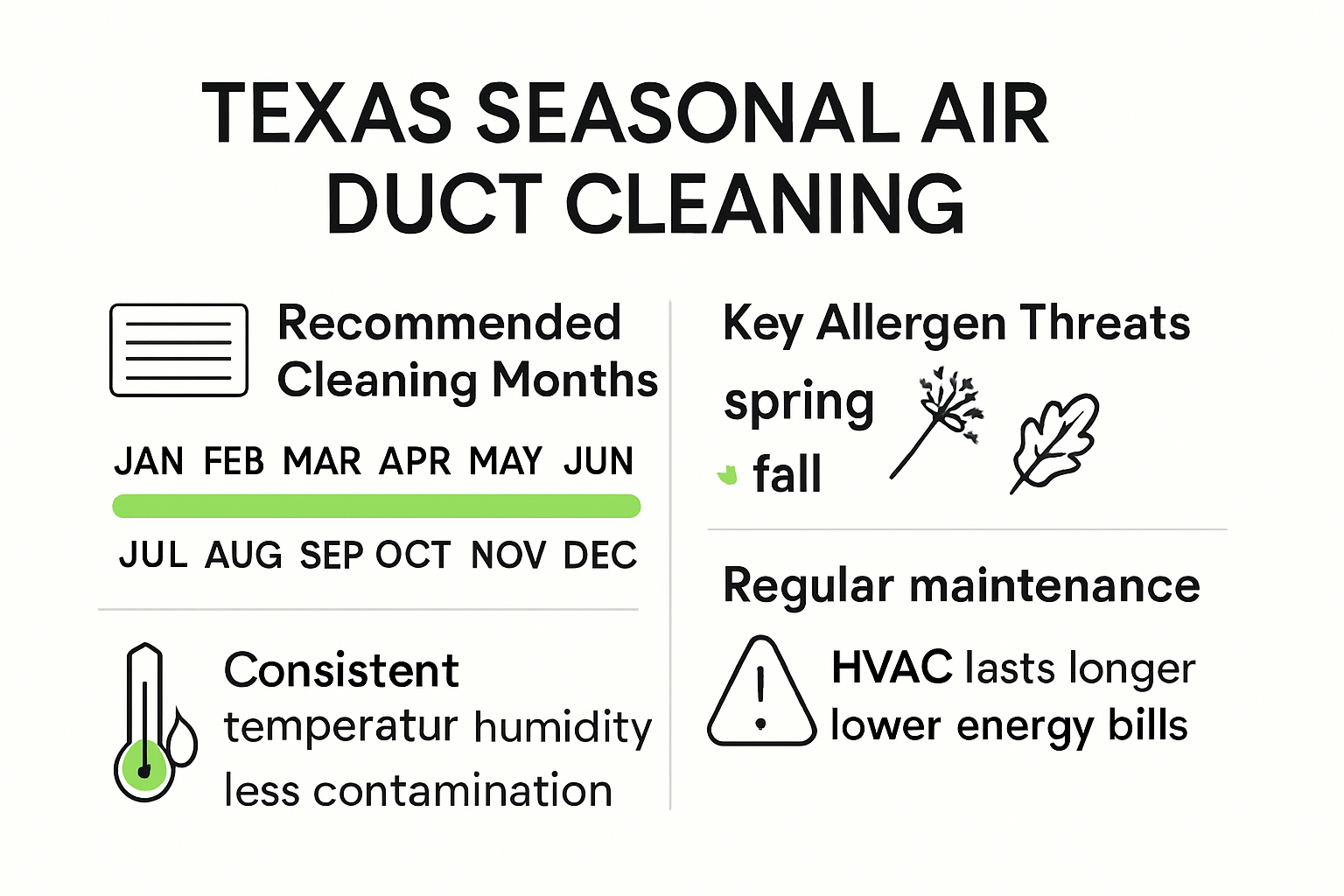
In Texas, air ducts benefit most from cleaning in early spring before peak air conditioning use and again in fall as heating systems switch on, since these seasonal transitions stir up dust and pollen trapped over the prior months. Texas's long cooling season and high humidity accelerate dust buildup and mold growth compared to milder climates, making seasonal checks more useful than relying on a single annual cleaning. Green Home Services recommends a spring inspection for San Antonio and Austin homeowners to keep HVAC systems running efficiently through summer heat.
Texas homes face a serious challenge when it comes to indoor air quality and energy bills. With humidity and airborne dust pushing HVAC systems to work overtime in over 80 percent of Texas homes each season, you might expect a quick filter change to fix the problem. Actually, skipping routine duct cleaning can cost you more than comfort. It sets the stage for sneaky health risks and rising utility bills that most homeowners never see coming.
Table of Contents
- Why Seasonal Duct Cleaning Matters In Texas
- Best Times Of Year For Air Duct And Vent Cleaning
- How Seasonal Cleaning Improves Indoor Air Quality
- Tips For Choosing A Local Duct Cleaning Service
Quick Summary
| Takeaway | Explanation |
|---|---|
| Regular duct cleaning is essential in Texas | High humidity and dust can harm indoor air quality and HVAC efficiency, making seasonal cleanings necessary. |
| Clean ducts reduce allergens and contaminants | Routine cleaning removes pollen, dust mites, and debris, improving air quality and respiratory health. |
| Best cleaning times are spring and fall | Schedule maintenance before heavy HVAC usage in summer or winter to optimize system performance. |
| Choose certified duct cleaning professionals | Verify credentials and experience to ensure quality service tailored to Texas’s unique environmental challenges. |
| Understand service offerings for better maintenance | Look for providers who offer thorough evaluations and post-cleaning recommendations to maintain air quality. |
Why Seasonal Duct Cleaning Matters in Texas
Texas homeowners face unique environmental challenges that make seasonal duct cleaning not just a maintenance task, but a critical aspect of home health and comfort. The state’s extreme climate conditions create a perfect storm of factors that can dramatically impact indoor air quality and HVAC system performance.
The Texas Climate and Indoor Air Quality
Texas experiences intense temperature variations and high humidity levels that create an ideal breeding ground for potential air quality issues. Learn more about our seasonal cleaning recommendations to protect your home environment. According to the U.S. Environmental Protection Agency, visible mold growth inside ducts represents a significant health concern, particularly in regions with high moisture levels like Texas.
The state’s unique combination of heat, humidity, and dust presents multiple challenges for homeowners. Dust, pollen, pet dander, and microscopic debris accumulate rapidly in air ducts, creating potential respiratory irritants. During summer months, when air conditioning runs continuously, these contaminants circulate repeatedly through your home, potentially exacerbating allergies and respiratory conditions.
Hidden Risks of Neglected Duct Systems
Neglecting seasonal duct maintenance can lead to more than just poor air quality. The Texas Department of Insurance recommends regular system inspections to ensure optimal performance and safety. Accumulated debris can significantly reduce HVAC system efficiency, causing increased energy consumption and higher utility bills.
Dirty air ducts force your heating and cooling system to work harder, creating additional strain that can lead to premature equipment failure. In a state where temperatures can swing dramatically from scorching summers to occasional freezing winters, your HVAC system needs every advantage to maintain consistent performance.
Moreover, unclean ducts can become habitats for various contaminants. Dust mites, bacteria, mold spores, and even small pest infestations can thrive in neglected ductwork. These hidden populations can compromise not just air quality, but the overall health of your living environment.
Seasonal duct cleaning is more than a luxury in Texas it’s a necessity. By addressing your home’s air circulation system regularly, you protect your family’s health, improve energy efficiency, and extend the lifespan of your HVAC equipment. The investment in professional duct cleaning pays dividends through improved air quality, reduced energy costs, and peace of mind knowing your home’s respiratory system is clean and functioning optimally.
Best Times of Year for Air Duct and Vent Cleaning
Understanding the optimal timing for air duct and vent cleaning can significantly improve your home’s indoor air quality and HVAC system efficiency. Texas homeowners face unique seasonal challenges that make strategic maintenance crucial for protecting their living environment.
Spring Preparation: Clearing Winter Residue
Spring emerges as the premier season for comprehensive duct cleaning. Explore our detailed seasonal cleaning recommendations to optimize your home’s air quality. According to the U.S. Department of Energy, timing maintenance before peak cooling seasons ensures maximum system efficiency. During winter, dust, allergens, and potential moisture accumulate in your ductwork, creating an ideal environment for mold and bacterial growth.
Texas springs bring high pollen counts and increased allergen levels, making thorough duct cleaning essential. Removing winter’s accumulated debris prepares your HVAC system for the intense summer heat, reducing potential respiratory irritants and improving overall indoor air quality. Professional cleaning at this time helps eliminate pollutants that have settled during the cooler months, ensuring a fresh start for your home’s ventilation system.
Pre Summer and Fall Maintenance Windows
The U.S. Environmental Protection Agency recommends strategic timing for duct maintenance, particularly before periods of heavy system usage. In Texas, this translates to two critical maintenance windows: late spring (before summer) and early fall (before winter). These transition periods allow homeowners to address potential issues before extreme temperature demands stress the HVAC system.
Summer in Texas presents unique challenges with constant air conditioning use. Dust, pet dander, and moisture can quickly accumulate in your ductwork, reducing system efficiency and air quality. Similarly, before winter, a thorough cleaning ensures your heating system operates cleanly and efficiently. These strategic maintenance windows help prevent potential breakdowns, reduce energy consumption, and maintain a healthier indoor environment.
Factors Influencing Cleaning Frequency
While seasonal timing is crucial, individual home conditions also determine duct cleaning frequency. Homes with pets, recent renovations, smokers, or residents with respiratory conditions might require more frequent cleaning. Texas homeowners should consider additional factors like local construction, urban pollution, and specific household characteristics when planning duct maintenance.
Professional HVAC technicians recommend a comprehensive inspection every 3-5 years, with potential cleaning intervals adjusted based on specific environmental conditions.
Visible signs such as dust buildup around vents, unexplained respiratory issues, or noticeable odors when the system runs indicate it might be time for a thorough cleaning. By staying proactive and attentive to your home’s unique needs, you can maintain optimal indoor air quality and HVAC system performance throughout Texas’s challenging seasonal transitions.
Here’s a summary table to help Texas homeowners identify the best times of year to schedule air duct and vent cleaning, along with the reasons and benefits for each maintenance window.
| Season/Timing | Recommended Action | Main Reasons | Key Benefits |
|---|---|---|---|
| Spring | Comprehensive duct cleaning | Clear winter residue, high pollen | Prepares for summer, reduces allergens, improves air quality |
| Late Spring (Pre-Summer) | Schedule professional maintenance | Before heavy AC use | Boosts system efficiency, prevents summer breakdowns |
| Early Fall (Pre-Winter) | Duct inspection and cleaning | Before heating season | Readies for cold weather, ensures clean & efficient heating |
| Every 3-5 Years | Full HVAC duct inspection | HVAC best-practice | Detects issues, maintains system lifespan |
| As Needed | Clean upon visible dust, odors, or health issues | Home condition indicators | Responsive to household needs, promotes healthier environment |
How Seasonal Cleaning Improves Indoor Air Quality
Indoor air quality is a critical aspect of home health that directly impacts the well-being of Texas residents. Seasonal duct cleaning plays a pivotal role in maintaining a clean, healthy living environment by systematically removing contaminants that accumulate throughout the year.
Reducing Airborne Contaminants and Allergens
Learn more about managing indoor air quality for allergy sufferers. A comprehensive study published in Environmental Monitoring and Assessment reveals that professional duct cleaning can significantly reduce airborne particulate matter and bioaerosols in residential spaces. According to the U.S. Environmental Protection Agency, visible mold growth and substantial dust accumulation are key indicators that duct cleaning may be necessary.
Texas homes face unique challenges with airborne contaminants. Pollen, dust mites, pet dander, and microscopic debris constantly circulate through HVAC systems, creating potential respiratory irritants. Seasonal cleaning disrupts this cycle by removing accumulated pollutants, preventing them from continuously recirculating throughout your living space. This process is particularly crucial for households with individuals suffering from allergies, asthma, or other respiratory conditions.
Preventing Microbial Growth and Contamination
The humid Texas climate creates an ideal environment for microbial growth within air duct systems. Moisture, combined with organic matter like dust and debris, can quickly become a breeding ground for mold, bacteria, and other harmful microorganisms. Regular seasonal cleaning interrupts this potential health hazard by removing the conditions that support microbial proliferation.
Research indicates that professional duct cleaning methods can dramatically reduce the concentration of bioaerosols. The Air Sweep method, in particular, has shown significant effectiveness in eliminating airborne contaminants. By removing these potential sources of infection and respiratory irritation, homeowners can create a healthier indoor environment that protects their family’s respiratory health.
Long-Term Health and HVAC System Benefits
Beyond immediate air quality improvements, seasonal duct cleaning offers long-term health and system performance benefits. Accumulated debris forces HVAC systems to work harder, reducing efficiency and potentially introducing additional contaminants into your living space. Regular cleaning helps maintain optimal system performance, reduces energy consumption, and extends the lifespan of your heating and cooling equipment.
Homeowners should approach duct cleaning as a proactive health measure. While not a cure-all solution, it represents a critical component of comprehensive indoor air quality management. By removing accumulated contaminants, preventing microbial growth, and maintaining HVAC system efficiency, seasonal duct cleaning provides a comprehensive approach to protecting your home’s air quality. For Texas residents navigating the challenges of diverse environmental conditions, this approach offers a practical strategy for maintaining a clean, healthy living environment.
Tips for Choosing a Local Duct Cleaning Service
Selecting the right duct cleaning service is crucial for maintaining your home’s indoor air quality and HVAC system efficiency. Texas homeowners face unique challenges when identifying a reliable and professional service that can effectively address their specific environmental needs.
Verifying Professional Credentials and Expertise
Explore our comprehensive guide to selecting the right duct cleaning professionals to ensure quality service. According to the National Air Duct Cleaners Association (NADCA), homeowners should prioritize companies with proper industry certifications and memberships. Reputable duct cleaning services should be able to provide evidence of NADCA membership, which indicates adherence to rigorous professional standards and ongoing industry education.
Beyond certification, examine the company’s experience specifically with Texas home environments. Look for service providers who understand the unique challenges posed by the state’s humidity, dust conditions, and temperature variations. Request proof of licensing, insurance, and professional training. A reliable company will be transparent about their qualifications and willingly provide documentation demonstrating their expertise.
Comprehensive Service Evaluation and Transparency
The U.S. Environmental Protection Agency recommends obtaining detailed service proposals before committing to a duct cleaning service. A professional company should provide a comprehensive, written assessment that outlines the specific cleaning methods, equipment to be used, estimated time for completion, and a clear pricing structure.
Beware of companies that make exaggerated claims about health benefits or guarantee complete elimination of all contaminants. Legitimate duct cleaning services will provide realistic expectations and focus on thorough, systematic cleaning approaches. Request references from previous clients, particularly those in similar Texas residential environments. Check online reviews, but also seek testimonials that speak to the company’s reliability, professionalism, and attention to detail.
Understanding Service Scope and Post-Cleaning Recommendations
A top-tier duct cleaning service does more than simply clean your air ducts. They should provide a comprehensive evaluation of your HVAC system, identifying potential issues like moisture problems, potential mold growth, or system inefficiencies. Look for professionals who offer post-cleaning recommendations for maintaining air quality and system performance.
Quality service providers will explain their cleaning process in detail, including the types of equipment and techniques they use. They should be able to answer questions about how they address specific concerns like pet dander, construction dust, or humidity-related contaminants. Consider companies that offer additional services such as HVAC system inspection, humidity control advice, or follow-up maintenance recommendations.
Choosing the right duct cleaning service is an investment in your home’s health and comfort. Take time to research, ask detailed questions, and select a provider who demonstrates expertise, transparency, and a genuine commitment to improving your indoor air quality. For Texas homeowners, this means finding a service that understands the unique environmental challenges of the state and can provide tailored, professional solutions.
The following table provides a checklist of key professional credentials, service practices, and transparency factors Texas homeowners should verify when choosing a local duct cleaning company.
| Professional Factor | What to Look For | Why It Matters |
|---|---|---|
| Industry Certifications | NADCA membership, proof of training | Ensures high standards and expertise |
| Local Experience | Knowledge of Texas climate & dust challenges | Tailored solutions for regional conditions |
| Licensing & Insurance | State licensing, liability insurance | Protects homeowner against damages/accidents |
| Detailed Service Proposals | Written assessments and clear pricing | Promotes service transparency and trust |
| Realistic Claims | No exaggerated health guarantees | Avoids misleading expectations |
| References & Reviews | Positive feedback from similar Texas clients | Indicates reliable and professional service |
| Post-Cleaning Recommendations | Follow-up advice for air quality maintenance | Supports ongoing HVAC health and efficiency |

Frequently Asked Questions
Why is seasonal duct cleaning important for Texas homeowners?
Seasonal duct cleaning is crucial for Texas homeowners due to the state’s high humidity and airborne dust, which can negatively impact indoor air quality and HVAC efficiency. Regular cleaning helps reduce allergens, contaminants, and potential health risks.
When is the best time to schedule duct cleaning in Texas?
The best times to schedule duct cleaning in Texas are during spring (to clear winter residue) and early fall (before the winter heating season). This strategic timing helps prepare HVAC systems for peak usage periods and improves indoor air quality.
How often should I have my air ducts cleaned if I have pets?
Homeowners with pets should consider cleaning their air ducts more frequently, typically every 1-2 years, as pet dander and hair can accumulate and impact air quality. Regular inspections and cleaning can help address these specific concerns.
What are the signs that my air ducts need cleaning?
Signs that air ducts may need cleaning include visible dust buildup around vents, unexplained respiratory issues, and noticeable odors when the HVAC system runs. If you notice any of these indicators, it may be time for a thorough duct cleaning.
Ready to Breathe Cleaner Air in Your Texas Home?
If you have ever worried about hidden dust, rising utility bills, or allergy triggers in your home, you are not alone. The challenges described in the Seasonal Duct Cleaning Guide for Texas Homeowners are real—humidity and airborne debris can silently affect your family’s health and comfort. When your ducts are neglected, you risk reduced air quality and costly HVAC problems. At Green Home Duct Cleaning, we address these specific Texas problems with solutions proven to keep your system running efficiently and your indoor air fresh.

Do not wait for seasonal allergens or unseen contaminants to take over your space. Discover how our expert team in San Antonio and Austin delivers eco-friendly and thorough duct cleaning tailored for Texas conditions. Check out our Seasonal Cleaning Recommendations or visit Green Home Duct Cleaning to schedule your service today. Take the next step towards a cleaner, healthier home by contacting us now.
Recommended
- Spring Cleaning Air Ducts: Texas Homeowners’ 2025 Guide – Green Home Services
- Duct Cleaning Frequency in Texas: 2025 Guide for Homeowners – Green Home Services
- When to Clean Air Ducts: Texas Homeowners’ Guide 2025 – Green Home Services
- Duct Cleaning Frequency in Texas: 2025 Guide for Homeowners – Green Home Services

Green Home Services is a trusted provider of air duct, dryer vent and chimney cleaning across San Antonio and Austin, Texas.