
How do I prevent duct condensation in winter?
Duct condensation forms when warm, moist air touches a cold duct surface. In winter, the usual causes are poorly insulated ducts in cold attics or crawl spaces, leaky ducts that pull in humid or cold air, exhaust ducts that carry moist air and high indoor humidity. Prevention means insulating exposed ducts, sealing leaks, controlling humidity, and keeping airflow balanced. Persistent moisture, staining or musty smells deserve a professional look.
Key Takeaways
- Condensation needs two things: moisture in the air and a surface colder than that air’s dew point.
- Uninsulated or under-insulated ducts in unconditioned spaces are the most common trouble spots.
- Sealing leaks and insulating accessible ducts address the cause, not just the symptom.
- Indoor humidity matters. The EPA suggests keeping it below 60 percent, ideally 30 to 50 percent.
- Repeated dampness, rust, stains, or odors need inspection before they turn into larger repairs.
What Duct Condensation Is and Why It Happens
Air holds water vapor, and warm air holds more than cold air. When humid air meets a surface that is cooler than its dew point, the vapor turns into liquid droplets. You see the same effect on a cold glass of water on a warm day. Inside a home, that surface can be a duct wall, a register, a boot, or the metal collar where a duct joins another component.
People usually associate duct condensation with summer, when cold air from the air conditioner runs through ducts in a hot attic. Winter condensation works the opposite way. Warm, moist air from inside the house meets ductwork chilled by a cold attic, crawl space or exterior wall. It is less common in a mild climate like Central Texas than in northern states, yet it still happens on cold nights, especially where ducts are poorly insulated or leaking.
The key point is that condensation is a symptom. The actual causes are usually insulation gaps, air leaks, humidity, or airflow problems, and fixing those prevents the moisture from returning.
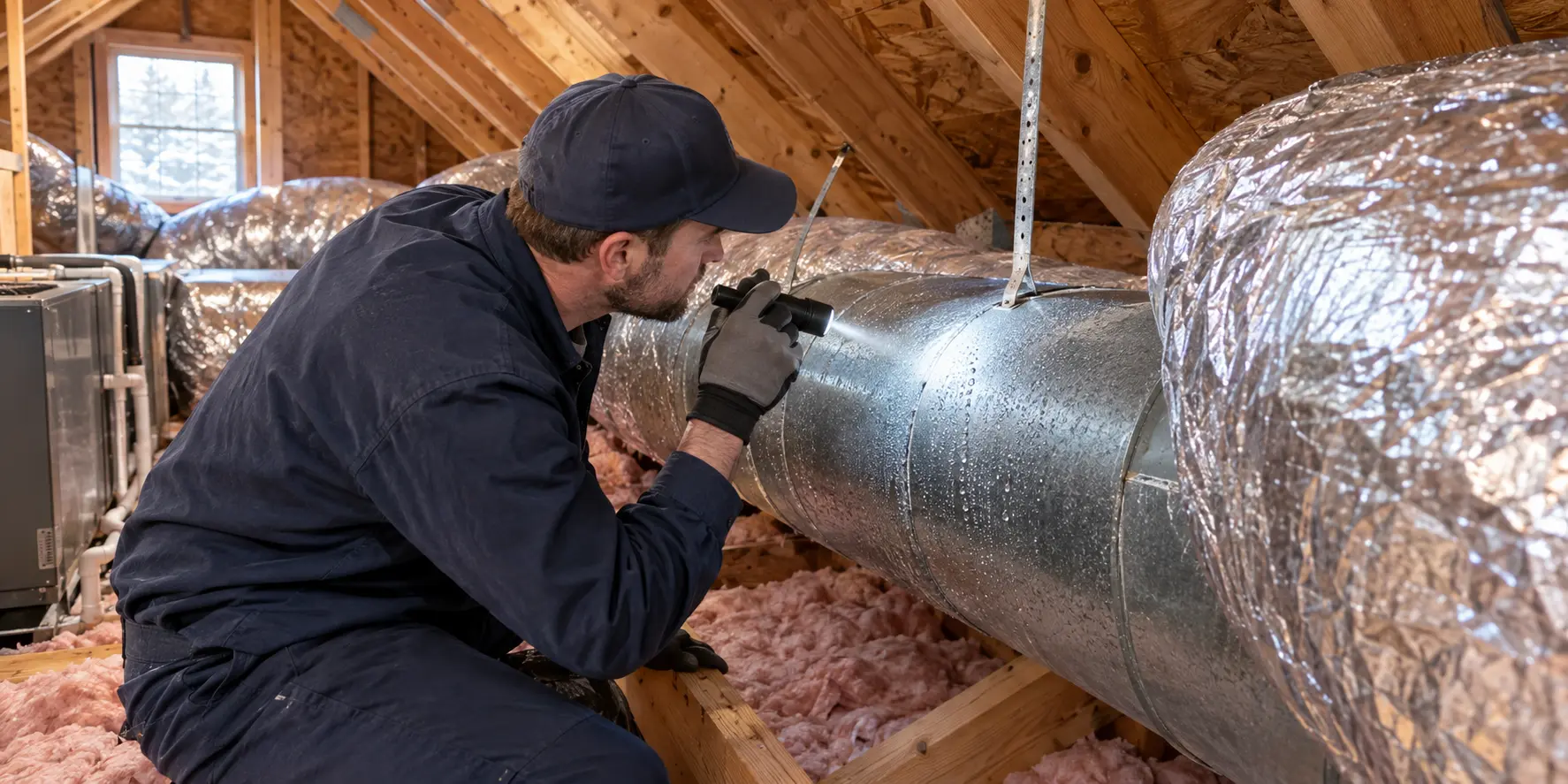
Where Winter Duct Condensation Usually Shows Up
| Location | Why it happens | What you may notice |
|---|---|---|
| Ducts in attics | Cold air surrounds the duct while warm, humid air flows or leaks through it | Damp insulation, drips onto ceilings |
| Ducts in crawl spaces or garages | Surfaces stay cold overnight with little insulation | Wet duct surfaces, rust on metal parts |
| Registers and vent covers | Warm room air meets a cooler boot or collar | Moisture or water marks around the vent |
| Bath fan and range hood exhaust ducts | Moist air cools as it travels through an unheated space | Water dripping back toward the fan or ceiling |
| Return ducts with leaks | Cold or humid outside air is pulled in through gaps | Dampness near seams and connections |
Not every damp duct means a serious problem. A little moisture that dries quickly can be normal during a sharp temperature swing. Moisture that returns repeatedly, leaves stains or comes with odors is a different story, and that is when it is worth getting someone to look.
The Four Main Causes
1. Missing or poor insulation
Insulation keeps the duct surface closer to the temperature of the air inside it. If it is missing, compressed, torn or has slipped off a section, that stretch of duct can run cold and collect moisture. Flexible ducts are especially prone to sagging and kinks, which affect both insulation and airflow.
2. Air leaks at joints and seams
Leaks allow air to move in or out where it should not. Warm indoor air escaping into a cold attic carries moisture with it, and cold air pulled in through a leaky return can chill surfaces and disrupt the system. According to ENERGY STAR, a typical home loses 20 to 30 percent of the air moving through its ducts to leaks, holes and loose connections, so leakage is a very common problem and not an unusual one.
3. High indoor humidity
Cooking, showers, laundry, humidifiers and even a house full of people all add moisture to indoor air. The more moisture in the air, the easier it is for a cold surface to trigger condensation. The EPA recommends keeping indoor relative humidity below 60 percent, ideally between 30 and 50 percent.
4. Airflow problems
Blocked returns, clogged filters, closed vents, and undersized ducts change how air moves and where it cools. Uneven airflow can leave some duct runs colder than others. Our article on poor airflow in the house explains the common causes and what to check first.
How to Prevent Duct Condensation
Prevention works best when you address the cause rather than wiping up drips. These steps are listed from easiest to most involved.
| Step | What to do | Who usually does it |
|---|---|---|
| Control humidity | Use bath and kitchen exhaust fans, fix leaks, and check humidifier settings | Homeowner |
| Check filters and vents | Replace dirty filters and keep supply and return vents open and unblocked | Homeowner |
| Look at exposed ducts | Check accessible ducts for missing insulation, sagging, or damp spots | Homeowner, with care in attics |
| Seal leaks | Seal joints and seams with mastic or approved tape | Professional, or experienced DIY for accessible spots |
| Insulate ducts | Add or repair insulation on ducts in unconditioned spaces | Professional for hard-to-reach runs |
| Review the whole system | Evaluate airflow, duct layout, and exhaust routing | HVAC professional |
ENERGY STAR advises sealing duct leaks with mastic sealant or metal tape and specifically cautions that standard duct tape is not long-lasting. Insulating accessible ducts afterward helps keep their surfaces closer to the temperature of the air inside. Our air duct sealing service addresses leaks, and our article on the difference between cleaning and sealing ducts explains why the two jobs are not interchangeable.
Bath Fans, Range Hoods and Other Exhaust Ducts
Exhaust ducts carry the moistest air in the house, and they often run through cold attic space on the way outside. If the duct is uninsulated, sags or is not sloped toward the outlet, moisture can condense inside and run back toward the fan. That is an easy cause to miss, because the problem appears at the ceiling and looks like a roof leak.
Check that each exhaust duct vents to the outdoors and not simply into the attic, that the connection to the fan housing is tight, and that any duct run through an unheated space is insulated. If you find a disconnected or damaged duct, it should be corrected promptly, since it will keep pushing moisture into the space around it.
What About Mold?
Moisture is one of the conditions mold needs, but dampness alone does not always lead to mold growth. The EPA notes that drying wet materials within 24 to 48 hours will usually prevent mold from growing. Duct condensation that dries quickly is a different situation from moisture that stays for days or keeps returning.
If you notice a persistent musty smell, visible staining or fuzzy growth near vents, do not assume the cause. Our articles on what causes a musty vent smell, mold in air ducts symptoms, and hidden mold in air ducts explain what to look for. If you suspect mold, a professional assessment through a mold and environmental remediation service can identify what is present and what to do next.
When Condensation Points to a Bigger Problem
Some patterns suggest the issue goes beyond a single duct. These include moisture that appears in the same place after each cold night, wet or sagging ceiling material below a duct, rust on registers or boots, water stains near the air handler and rooms that never seem to reach the right temperature. Any of these deserves a professional look, because the underlying cause could be a design or installation issue rather than a one-off event.
A professional visit to evaluate residential HVAC maintenance and repairs can include looking at duct routing, insulation, airflow, and the equipment itself. Homeowners in San Antonio and Austin who have older homes or ducts running through attics are often the ones who benefit most from a full review.
Frequently Asked Questions
Can ducts sweat in winter?
Yes, though it is less common than summer condensation. In winter, warm, humid indoor air can meet a duct chilled by a cold attic, crawl space or exterior wall and form moisture. Poor insulation, leaks and high indoor humidity make it more likely, particularly during cold nights in an otherwise mild climate.
Is duct condensation dangerous?
A small amount that dries quickly is usually not an emergency, but repeated moisture is a warning sign. It can damage insulation, stain ceilings, corrode metal parts and create conditions where mold may grow. If moisture keeps returning, or you notice stains or musty odors, have the system inspected.
How do I stop my ducts from dripping?
Find the cause first. Common fixes include insulating exposed ducts, sealing leaks at joints and seams, lowering indoor humidity and correcting airflow problems. For exhaust ducts, make sure they vent outside and are insulated through cold spaces. A professional can pinpoint the cause when the source is not obvious.
What humidity level is best for my home in winter?
The EPA suggests keeping indoor relative humidity below 60 percent, ideally between 30 and 50 percent. Lower levels are often better during cold weather, since cold surfaces reach their dew point sooner. A small, inexpensive humidity meter lets you track the level and adjust fans or humidifier settings accordingly.
Does duct sealing help with condensation?
It can. Sealing leaks stops warm, moist air from escaping into cold spaces and stops cold or humid air from being pulled into the system. Sealing works best alongside proper insulation and humidity control, since condensation usually has more than one contributing factor. An inspection can show which steps matter most.
Get Your Ducts Checked Before the Next Cold Snap
If you have noticed moisture, stains or musty odors near vents or ducts, contact us. We serve homes across San Antonio and Austin and can help you identify what is causing the problem and what to fix first.

Green Home Services is a trusted provider of air duct, dryer vent and chimney cleaning across San Antonio and Austin, Texas.