
Chimney cleaning might sound like a boring checklist item, but for Texas homeowners, it can make or break your insurance coverage. Get this. Over 43% of home heating fires are linked to fireplaces and chimneys, most caused by simple neglect. You would expect your policy to step in no matter what, right? Not quite. Insurance companies are denying claims every year when regular chimney maintenance is missing—and the simplest receipt or inspection report could be worth thousands in savings or payouts.
Table of Contents
- How Chimney Cleaning Affects Your Insurance
- Common Chimney Insurance Claims in Texas
- Tips for Homeowners: Saving on Insurance with Regular Cleaning
- What Texas Insurers Require for Chimney Maintenance
Quick Summary
| Takeaway | Explanation |
|---|---|
| Regular chimney cleaning reduces insurance risks. | Neglecting chimney maintenance can lead to claim denials and increased liabilities due to fire risks. |
| Documented maintenance boosts insurance credibility. | Keeping detailed records of professional inspections shows insurers proactive risk management, potentially leading to lower premiums. |
| Frequency of professional inspections is crucial. | Insurance providers typically require annual inspections by certified professionals to maintain coverage and reduce claim complications. |
| Storm-related damages are common claims. | Severe weather can cause significant chimney damage, often covered by insurance if documented promptly and accurately. |
| Proactive maintenance enhances property value. | Regular chimney upkeep protects your home from structural issues, ensuring safety and maintaining your property’s long-term value. |
How Chimney Cleaning Affects Your Insurance
Homeowners insurance and chimney maintenance are closely interconnected, with significant implications for your property’s safety and coverage. Understanding how chimney cleaning impacts your insurance can help you protect your home and potentially avoid costly claim complications.
Fire Risk and Insurance Liability
Research from the National Fire Protection Association reveals a startling statistic: 43% of home heating fires are directly related to fireplaces and chimneys, with most incidents caused by creosote buildup. Insurance companies view this risk seriously, which means your chimney’s maintenance status can dramatically affect your coverage and potential claims.
Insurers typically expect homeowners to demonstrate proactive maintenance. Neglecting chimney cleaning can be interpreted as negligence, potentially leading to claim denials. According to Texas insurance regulations, insurance providers may reduce payouts or completely reject claims if they determine that preventable damage occurred due to lack of proper maintenance.
Preventative Maintenance and Coverage
Regular chimney cleaning is more than a recommended practice – it’s a critical component of responsible homeownership that directly influences your insurance standing. Professional chimney inspections and cleanings create documented evidence of your commitment to home safety. These records can become crucial documentation if you ever need to file an insurance claim related to fire or structural damage.
Insurance adjusters look for clear signs of responsible property maintenance. A well-documented history of professional chimney cleaning demonstrates that you are a low-risk policyholder. This approach can potentially lead to more favorable insurance rates and smoother claims processing should an incident occur.
Financial Implications of Chimney Maintenance
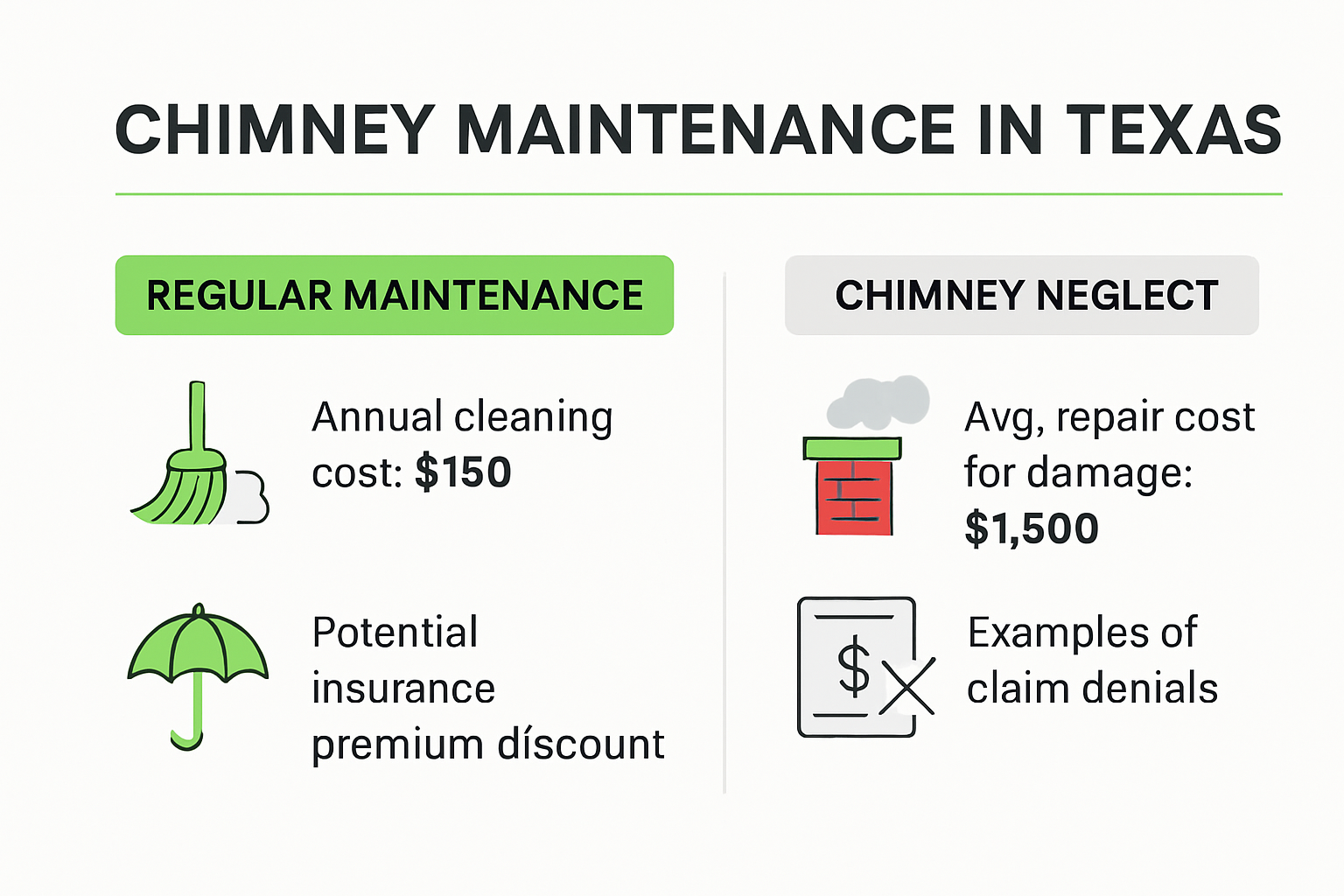
The financial impact of neglecting chimney maintenance extends beyond potential insurance complications. Unaddressed creosote buildup and structural issues can lead to expensive repairs or total chimney replacement. Most insurance policies require homeowners to mitigate known risks, which means regular professional chimney cleaning for Texas homeowners is not just recommended but often contractually implied.
Typical repair costs for chimney damage can range from $500 to $5,000, depending on the extent of neglect. By investing in annual professional cleaning and inspection, homeowners can avoid these potential expenses and maintain a strong insurance profile. Insurance companies appreciate proactive homeowners who take steps to minimize risk, which can translate into more stable and potentially lower insurance premiums.
Here’s a table summarizing the potential costs and insurance impacts of chimney maintenance versus neglect:
| Maintenance Practice | Average Annual Cost | Potential Repair Costs (from Neglect) | Insurance Impact |
|---|---|---|---|
| Regular Professional Cleaning & Inspection | $150 – $400 | $0 – $500 | Lower risk, claims more likely approved, possible premium savings |
| Infrequent or No Cleaning | $0 | $500 – $5,000+ | Higher denial risk, possible coverage reduction, higher premiums |
Common Chimney Insurance Claims in Texas
Navigating chimney-related insurance claims in Texas requires understanding the specific risks and coverage nuances that homeowners face. Texas weather conditions and regional characteristics create unique challenges for chimney maintenance and insurance protection.
Storm Damage and Chimney Structural Integrity
Research from Grange Insurance highlights that severe storms pose significant risks to chimney structures. Strong winds, fallen trees, and extreme weather events can cause substantial damage that may be covered under standard homeowners insurance policies. Chimney damage from storms often includes cracked masonry, displaced flashing, and structural misalignments that compromise the entire chimney system.
Texas homeowners frequently encounter storm-related chimney claims, particularly in regions prone to severe weather. Hail, high winds, and unexpected debris can create unexpected structural vulnerabilities. Documenting the damage immediately and working with professional inspectors becomes crucial for successful insurance claims.
Fire-Related Chimney Insurance Claims
Chimney experts indicate that fire-related claims represent a significant portion of chimney insurance submissions. Insurance providers typically cover chimney fires caused by sudden and unexpected events, but not those resulting from long-term neglect. This distinction underscores the importance of regular maintenance and professional chimney inspection for Texas properties.
Lightning strikes present another common claim scenario. These dramatic events often result in comprehensive coverage, as they represent a clear, sudden incident outside of the homeowner’s control. Insurers generally process lightning-related chimney damage claims more straightforwardly compared to maintenance-induced damages.
Water Damage and Hidden Structural Issues
Water intrusion represents a complex and potentially costly chimney insurance claim category. Damaged flashing, cracked mortar, and compromised chimney caps can lead to significant water damage that may not be immediately visible. Homeowners insurance policies often cover sudden water damage, but gradual deterioration might be excluded.
Texas homeowners should pay special attention to potential water damage indicators. Moisture stains, mold growth, and structural weakening near the chimney can signal underlying issues that might impact insurance claims. Professional annual inspections can help identify these problems before they escalate into major repair scenarios.
Understanding these common chimney insurance claims empowers Texas homeowners to take proactive measures. Comprehensive documentation, regular maintenance, and prompt reporting of potential damages can significantly improve the likelihood of successful insurance claims and protect your home’s structural integrity.
Below is a table organizing the most common types of chimney insurance claims in Texas, their typical causes, and important insurance considerations:
| Claim Type | Common Causes | Insurance Coverage Considerations |
|---|---|---|
| Storm Damage | High winds, fallen trees, hail | Usually covered if promptly documented and reported |
| Fire-Related Damage | Chimney fire, lightning | Sudden incidents covered; claims often denied if due to neglect |
| Water Damage | Leaks, flashing/mortar failure | Covered if sudden; gradual damage typically excluded |
| Structural Issues | Settling, poor maintenance | Coverage depends on cause & maintenance documentation |
Tips for Homeowners: Saving on Insurance with Regular Cleaning
Maintaining your chimney is not just about safety – it’s also a strategic approach to potentially reducing your homeowners insurance costs. By understanding how regular maintenance impacts your insurance profile, Texas homeowners can take proactive steps to protect their property and potentially lower their premiums.
Documenting Maintenance for Insurance Benefits
Research from the Texas Department of Insurance reveals that insurance providers often reward homeowners who demonstrate consistent property maintenance. Keeping detailed records of professional chimney cleaning and inspections can serve as powerful documentation that positions you as a low-risk policyholder.
Professional chimney cleaning reports provide tangible evidence of your commitment to home maintenance. These documents can include detailed inspection notes, cleaning certificates, and photographic documentation of your chimney’s condition. Insurance adjusters appreciate homeowners who take proactive measures to prevent potential damage, which can translate into more favorable insurance assessments.
Reducing Fire Risk and Insurance Claims
The National Fire Protection Association reports that 23% of home heating fires stem from creosote buildup, causing $33 million in property damage annually. Regular chimney maintenance directly reduces the likelihood of filing an expensive insurance claim. Insurance companies recognize this correlation and may offer incentives for homeowners who demonstrate responsible property care.
By investing in annual chimney cleaning for Texas homeowners, you not only protect your home but also create a documented history of preventative maintenance. This approach can potentially lead to lower insurance premiums and more comprehensive coverage options.
Strategic Maintenance and Insurance Negotiations
Homeowners can strategically approach insurance negotiations by presenting a comprehensive maintenance portfolio. Professional chimney inspections that identify and address potential issues before they escalate demonstrate responsible homeownership. According to home safety experts, annual chimney inspections can prevent costly repairs and reduce the risk of insurance claims.
Consider requesting a home insurance review after completing professional chimney maintenance. Many insurance providers offer discounts for homes with documented safety improvements. These may include reduced premiums for homes with recent chimney inspections, updated flue liners, or comprehensive cleaning certificates.
Proactive chimney maintenance is an investment in both your home’s safety and your financial well-being. By maintaining detailed records, reducing potential fire risks, and demonstrating responsible property care, Texas homeowners can potentially save money on their insurance while ensuring their home remains protected.
What Texas Insurers Require for Chimney Maintenance
Texas homeowners must understand the specific maintenance requirements set by insurance providers to ensure comprehensive coverage and prevent potential claim denials. These requirements go beyond basic home upkeep and reflect the unique environmental challenges faced by properties in the state.
Inspection and Documentation Standards
The Texas Department of Insurance emphasizes the critical importance of professional chimney inspections and thorough documentation. Insurers typically require annual professional inspections that provide comprehensive reports detailing the chimney’s structural integrity, potential hazards, and maintenance needs.
According to the Texas Real Estate Commission, inspectors must specifically report on several key areas including creosote buildup in accessible areas of the fireplace and flue, and the presence of proper fireblocking at chimney flue penetrations. These detailed reports serve as crucial evidence of proactive maintenance for insurance providers.
Maintenance Frequency and Professional Requirements
Travelers Insurance recommends that homeowners have their chimney, fireplace, wood, or pellet stove inspected and cleaned by a licensed chimney specialist to ensure safe and efficient operation. This recommendation is not just a suggestion but often a prerequisite for maintaining full insurance coverage.
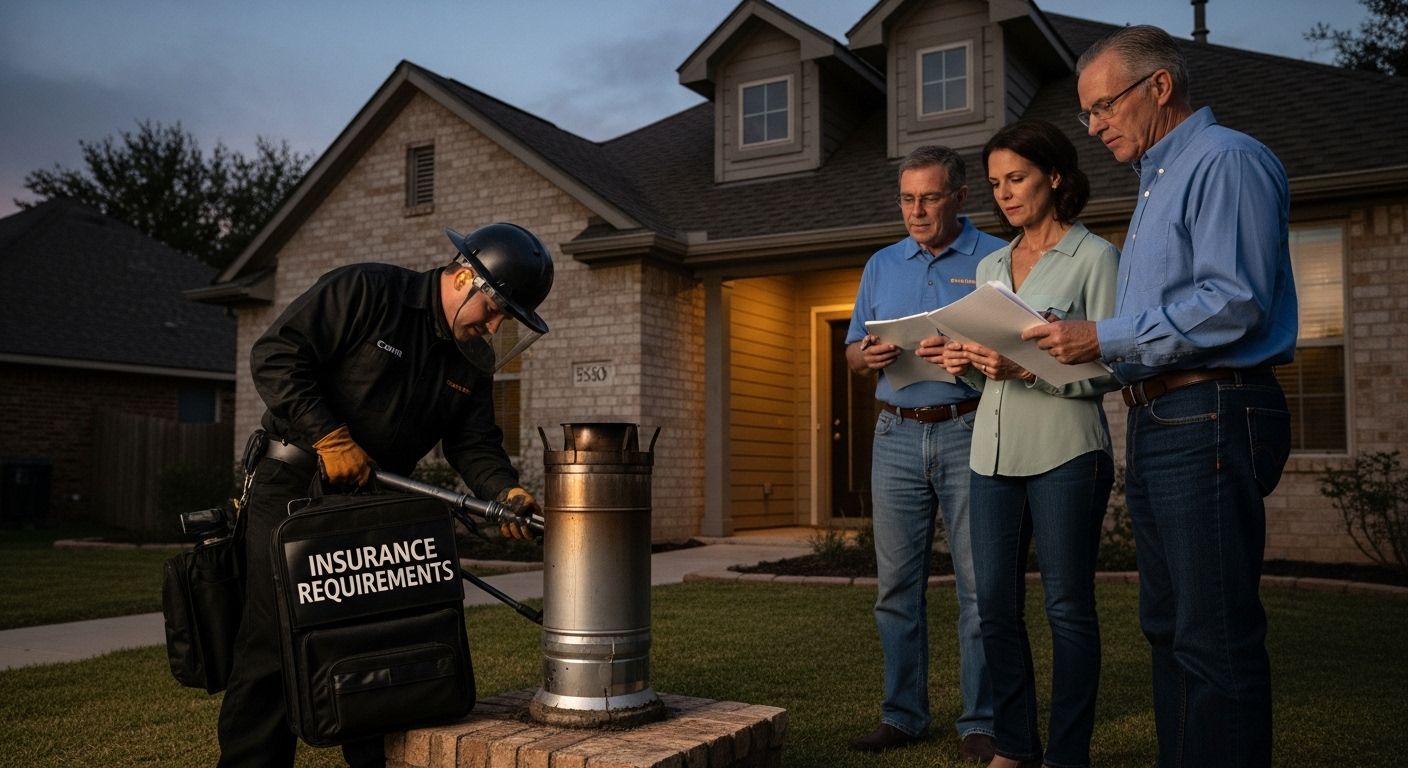
Texas insurers typically require:
- Annual professional chimney inspections
- Cleaning by certified chimney sweeps
- Comprehensive documentation of maintenance
- Immediate reporting of any structural changes or potential hazards
Homeowners should be prepared to provide detailed cleaning documentation for their Texas property to demonstrate ongoing maintenance and reduce potential insurance risks.
Specific Regional Maintenance Considerations
Texas presents unique challenges for chimney maintenance due to its diverse climate and weather conditions. Insurers pay close attention to how homeowners address region-specific maintenance issues. This includes protecting chimneys from potential storm damage, managing humidity-related risks, and preventing wildlife intrusions.
Specific regional requirements may include:
- Additional inspections after severe weather events
- Specialized maintenance for areas prone to high humidity
- Protective measures against local wildlife nesting
Failing to meet these maintenance standards can result in reduced coverage or claim denials. Insurance providers view regular, professional maintenance as a critical component of responsible homeownership. By understanding and exceeding these requirements, Texas homeowners can protect their property and ensure comprehensive insurance coverage.
Ultimately, chimney maintenance is not just about meeting insurance requirements. It’s about protecting your home, ensuring family safety, and maintaining the long-term value of your most significant investment.
Frequently Asked Questions
How often should I have my chimney cleaned in Texas?
Homeowners in Texas should have their chimneys professionally inspected and cleaned at least once a year to ensure safety and maintain insurance coverage.
Does chimney cleaning affect my home insurance policy?
Yes, regular chimney cleaning can positively affect your home insurance policy by reducing the risk of fire-related claims and potentially lowering your premiums.
What happens if I don’t clean my chimney?
Neglecting chimney cleaning can lead to dangerous creosote buildup, increasing the risk of chimney fires and resulting in claim denials from your insurance company if damage occurs due to lack of maintenance.
How can I document my chimney maintenance for insurance purposes?
You can document your chimney maintenance by keeping detailed records of professional inspections, cleaning reports, and any repairs made, which can serve as evidence of responsible homeownership to your insurance provider.
Ready to Protect Your Home and Your Insurance?
When it comes to keeping your Texas home safe, the article exposed one hard truth. Overlooking regular chimney cleaning can put your whole insurance coverage at risk. If you worry about claim denials, surprise repairs, or simply want proof your home is properly maintained, you need a reliable partner. At Green Home Duct Cleaning, we understand what Texas insurers require. Our professional chimney cleaning and documentation services not only reduce fire risks, they also give you the peace of mind—and paperwork—that insurers trust.
Take action before small oversights turn into big problems. Protect your investment and save money on potential insurance disputes by scheduling your next cleaning today. Visit Green Home Duct Cleaning to learn more about our professional solutions, or discover what makes our chimney cleaning for Texas homeowners different. Don’t leave your coverage or your safety to chance. Book your service now and make chimney maintenance one less thing to worry about.
Recommended
- Chimney Cleaning Safety Tips for Texas Homeowners 2025 – Green Home Services
- Chimney Cleaning for New Homeowners in Texas: 2025 Guide – Green Home Services
- Chimney Cleaning Basics for Texas Homeowners 2025 – Green Home Services
- Chimney Cleaning for Rental Properties in Texas: 2025 Guide – Green Home Services